Best Walkie Talkies 2026 | Tested & Reviewed by liGo

Best Walkie Talkies 2026 | Tested & Reviewed by liGo

Choosing the best walkie talkies depends on where and how you plan to use them. A rugged waterproof radio can make sense for hiking, kayaking and outdoor adventures, while a simpler, lighter model may be a better choice for families or occasional use. We’ve been testing and selling two-way radios for more than a decade, giving us experience across everything from licence-free radios for leisure use to models designed for more demanding environments. For this guide, we’ve compared our current recommendations on range, build quality, battery life, ease of use and value.

Our best overall pick is the Motorola T92. Below, we explain where each of our recommendations makes the most sense.

Best walkie talkies 2026: At a glance:

Walkie Talkie Our verdict Claimed range* Weather protecion Battery life Best for
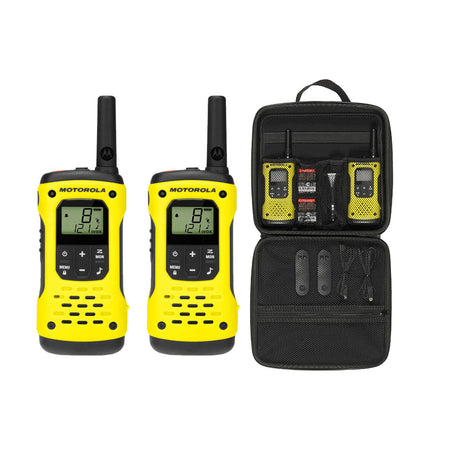
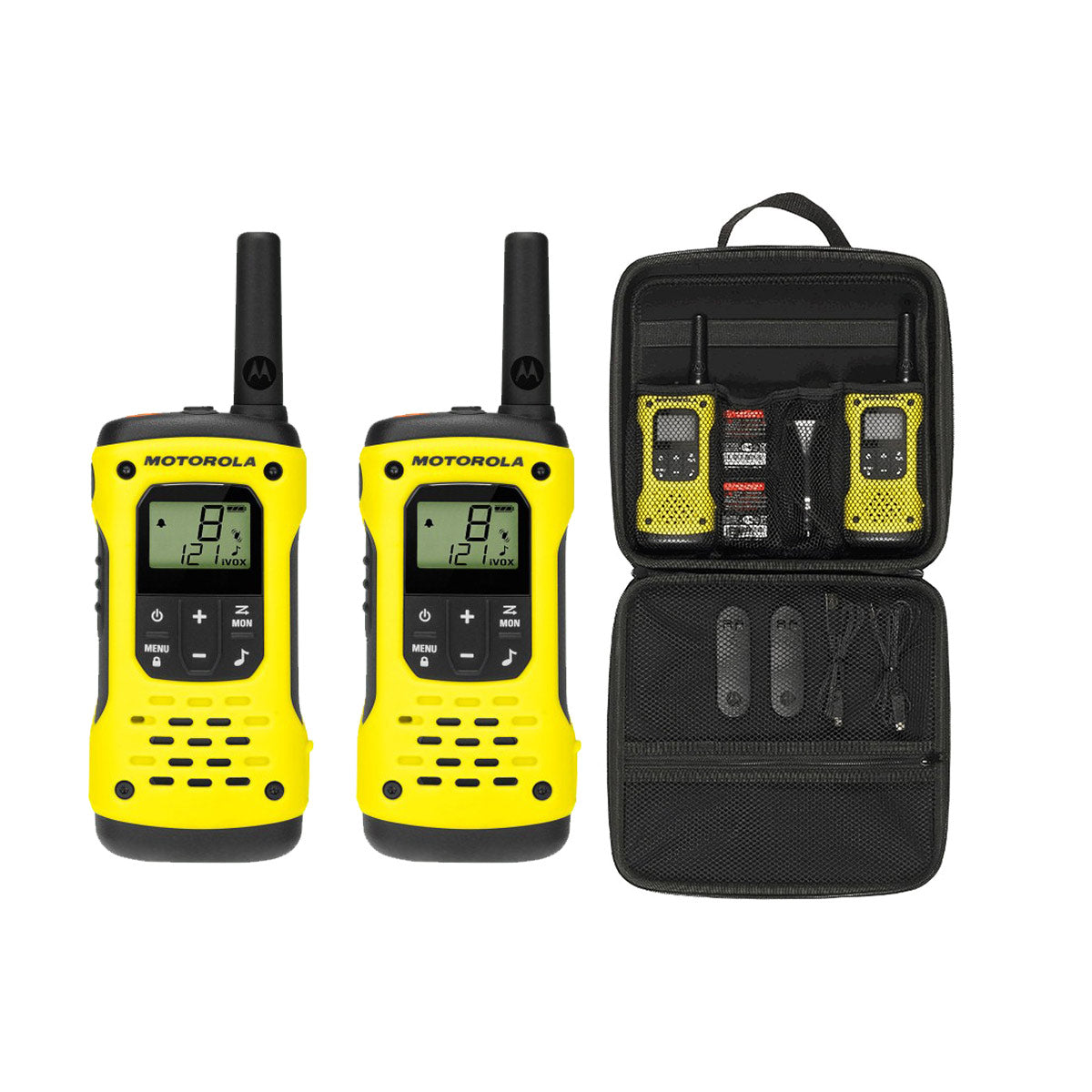
Motorola Talkabout T92 H20 Best overall Up tp 10km IP67 Up to 17 hours Outdoor adventures & demanding conditions
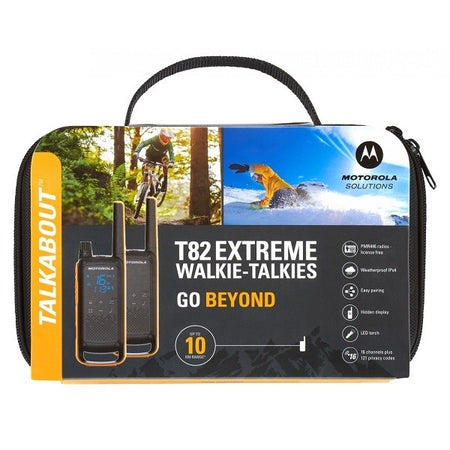
Motorola Talkabout T82 Extreme Best for hiking Up to 8km IPX4 Up to 18 hours Walking, hiking & camping
Cobra PX650 Best for larger teams & workplaces Up to 12km IP54 Up to 18 hours Events, organised activities, large groups
Motorola Talkabout T62 Best value Up to 8km - Up to 18 hours Families, camping & general use
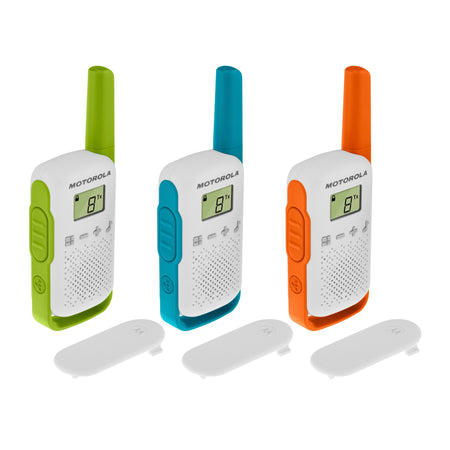
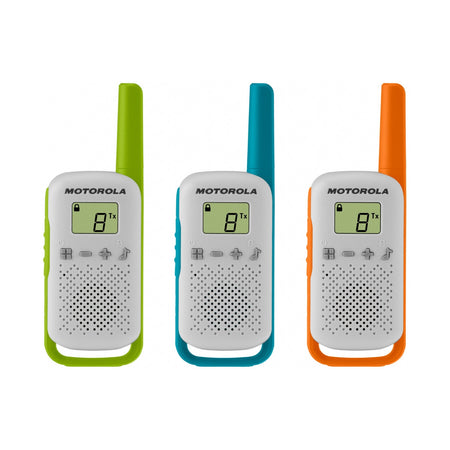
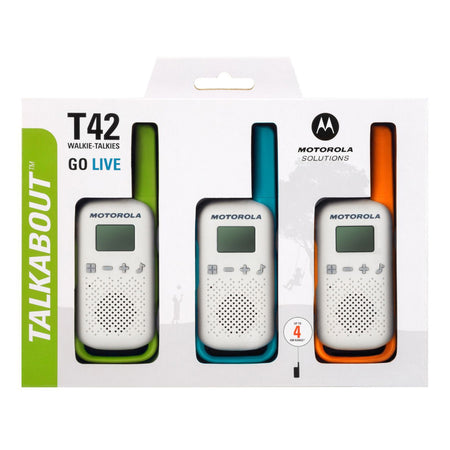
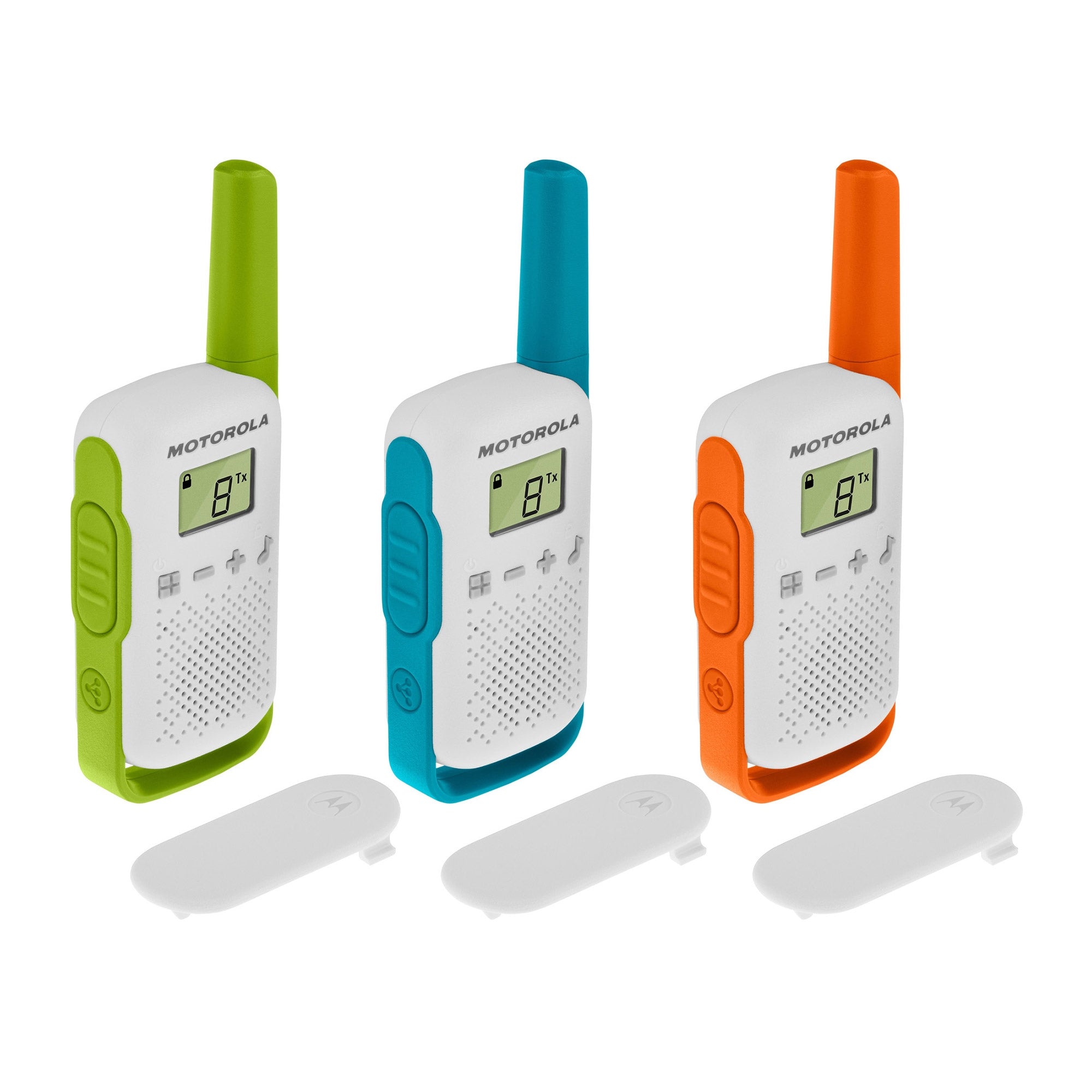
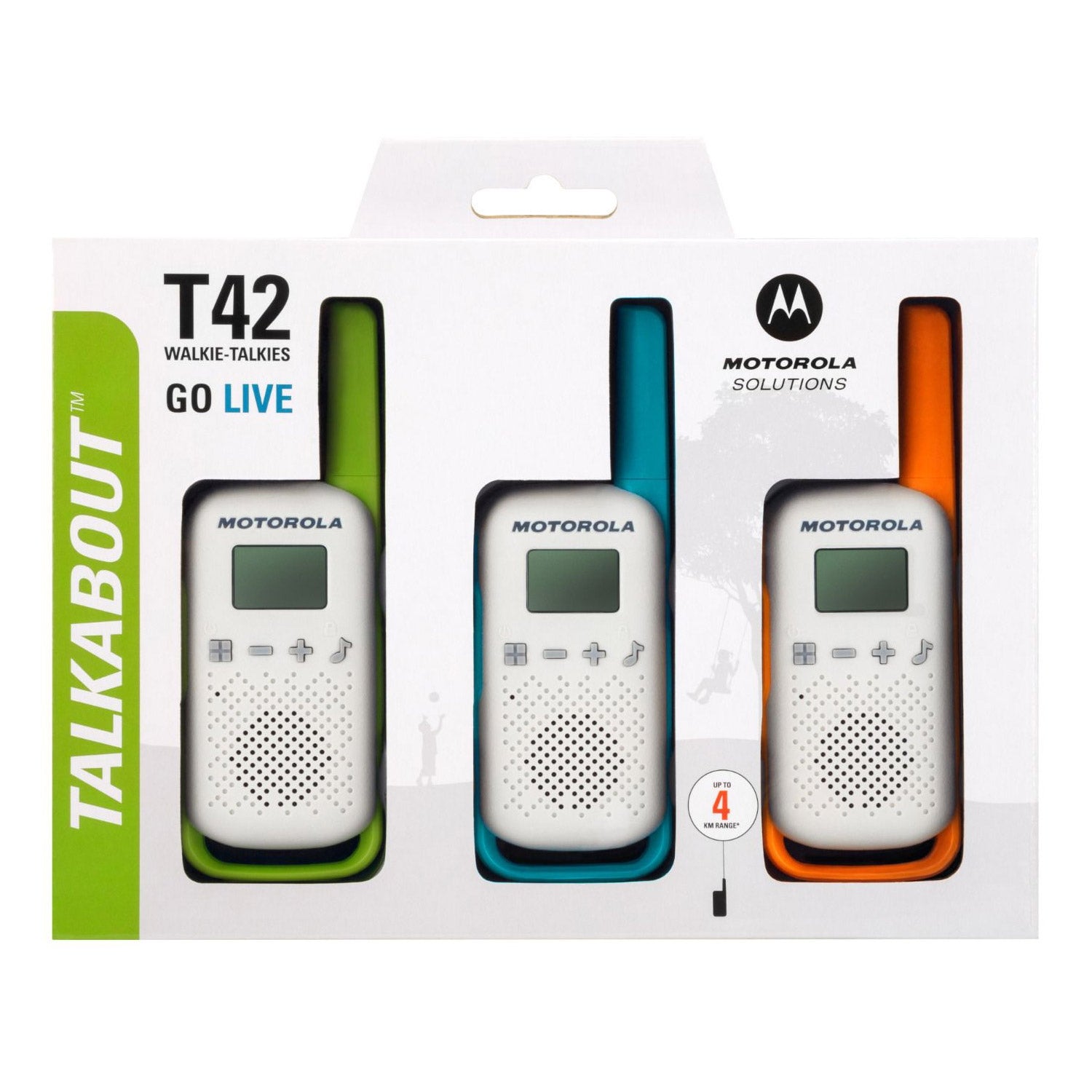
Motorola TLKR T42 Best for kids Up to 4km - Approx. 18 hours Children & family holidays
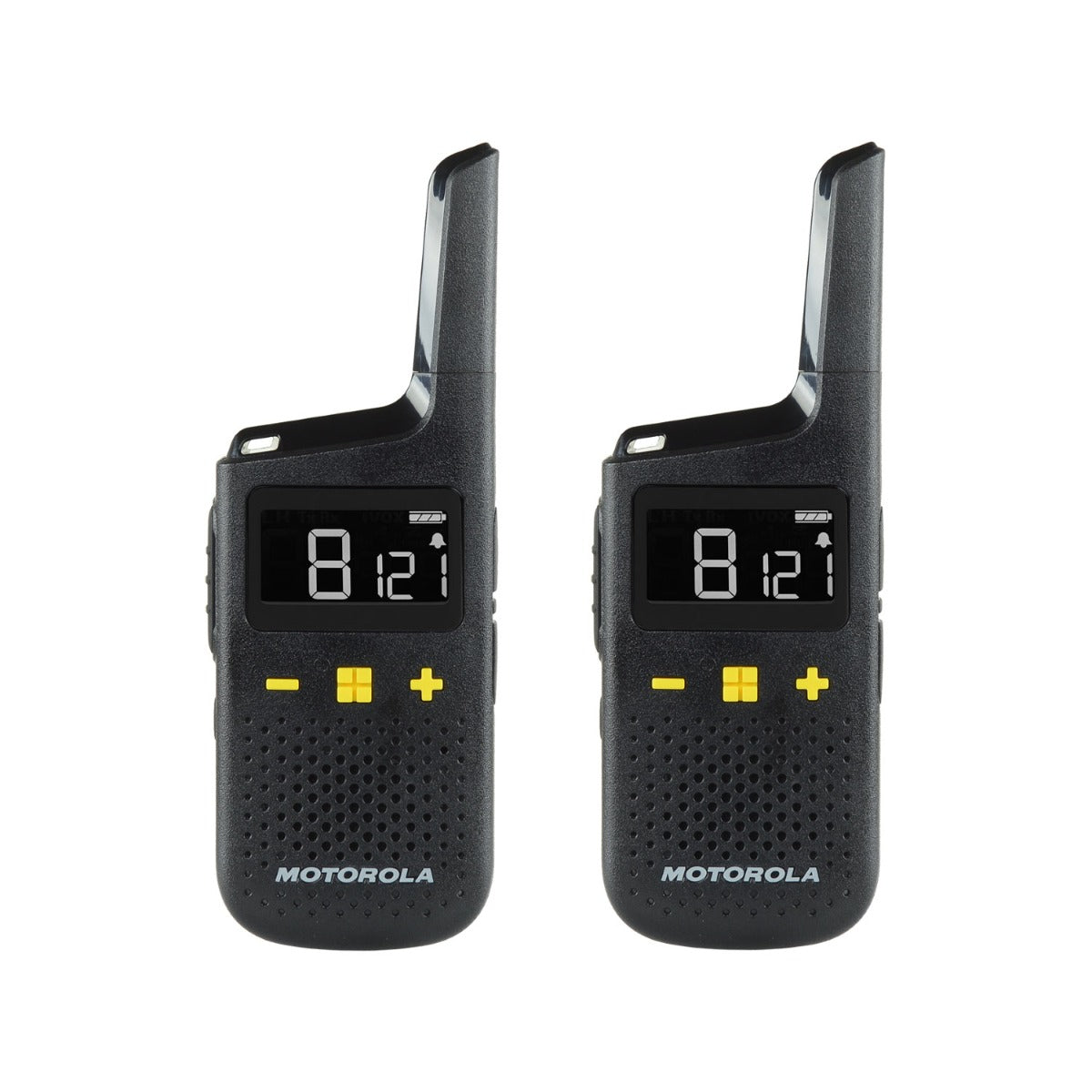
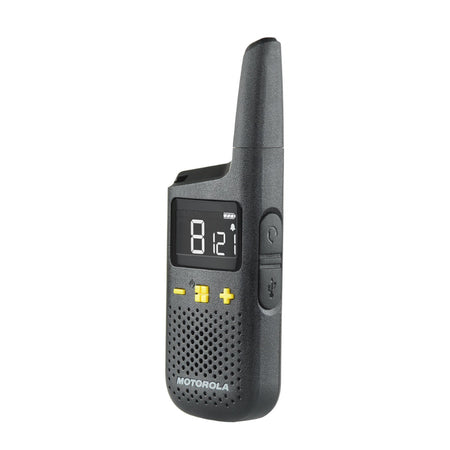
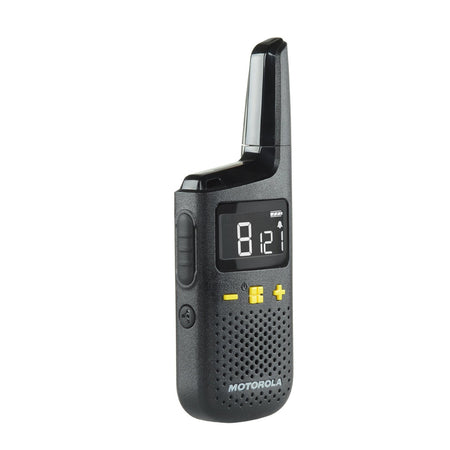
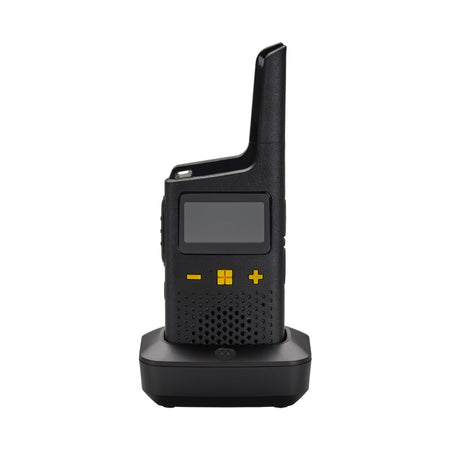
Motorola XT185 Best for small businesses Up to 8km IP54 Up to 24 hours Shops, cafés & smaller workplaces

*Manufacturer maximum; actual usable range depends heavily on terrain, buildings and other obstructions.

How we test walkie talkies

We’ve been selling and testing two-way radios for more than a decade. Rather than judging radios purely from their specifications, we assess how they perform in practical use. From testing at our warehouse in Glasgow to the summit of a Munro in the Highlands. Depending on the model, we consider communication clarity and usable range, ease of setup, controls, battery performance, build quality, weather protection and how comfortable the radios are to carry and use.

We also draw on our wider experience of customer feedback, returns and warranty issues when deciding which models we recommend. For each binocular, we consider:

  • Range and clarity;
  • Battery life;
  • Ease of use;
  • Build quality;
  • Weather protection;
  • Size and weight;
  • and additional features and value for money.

The labels in this guide reflect the best use for each model, not a simple ranking from one to six.

Leave a comment

Please note, comments need to be approved before they are published.


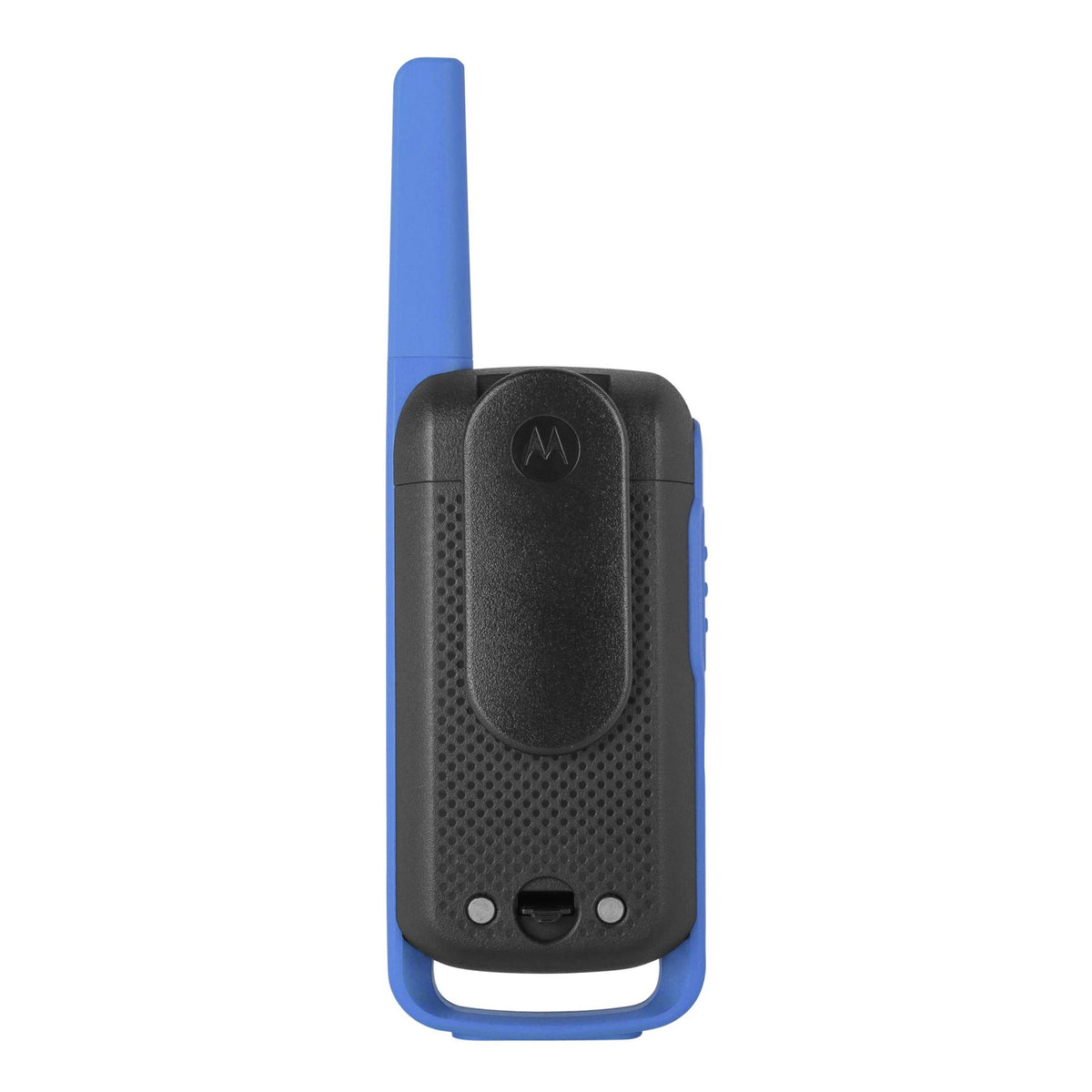
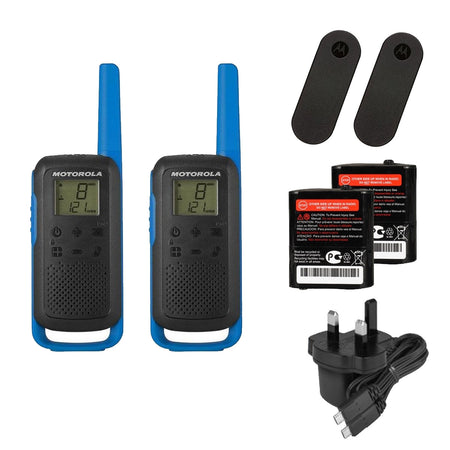
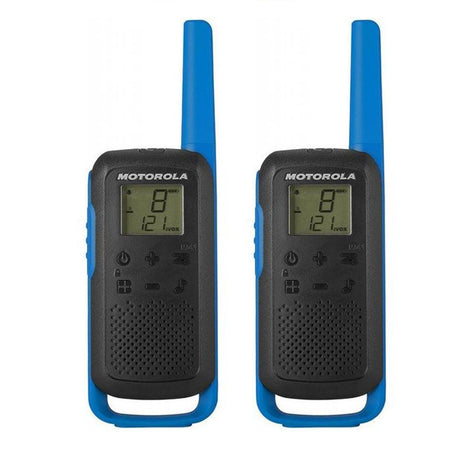
1. Motorola TLKR T92: Best Walkie Talkies Overall

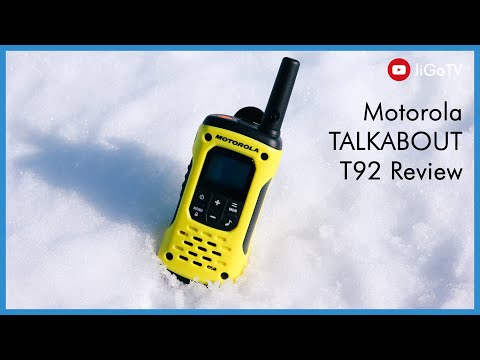
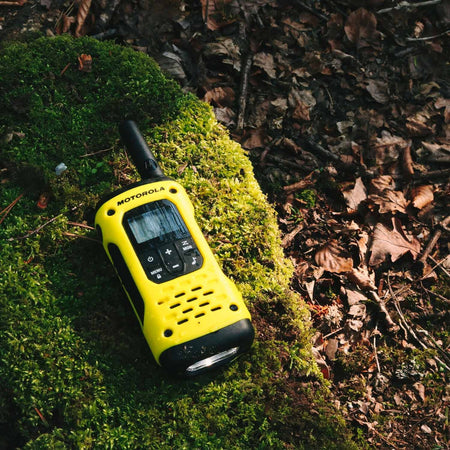
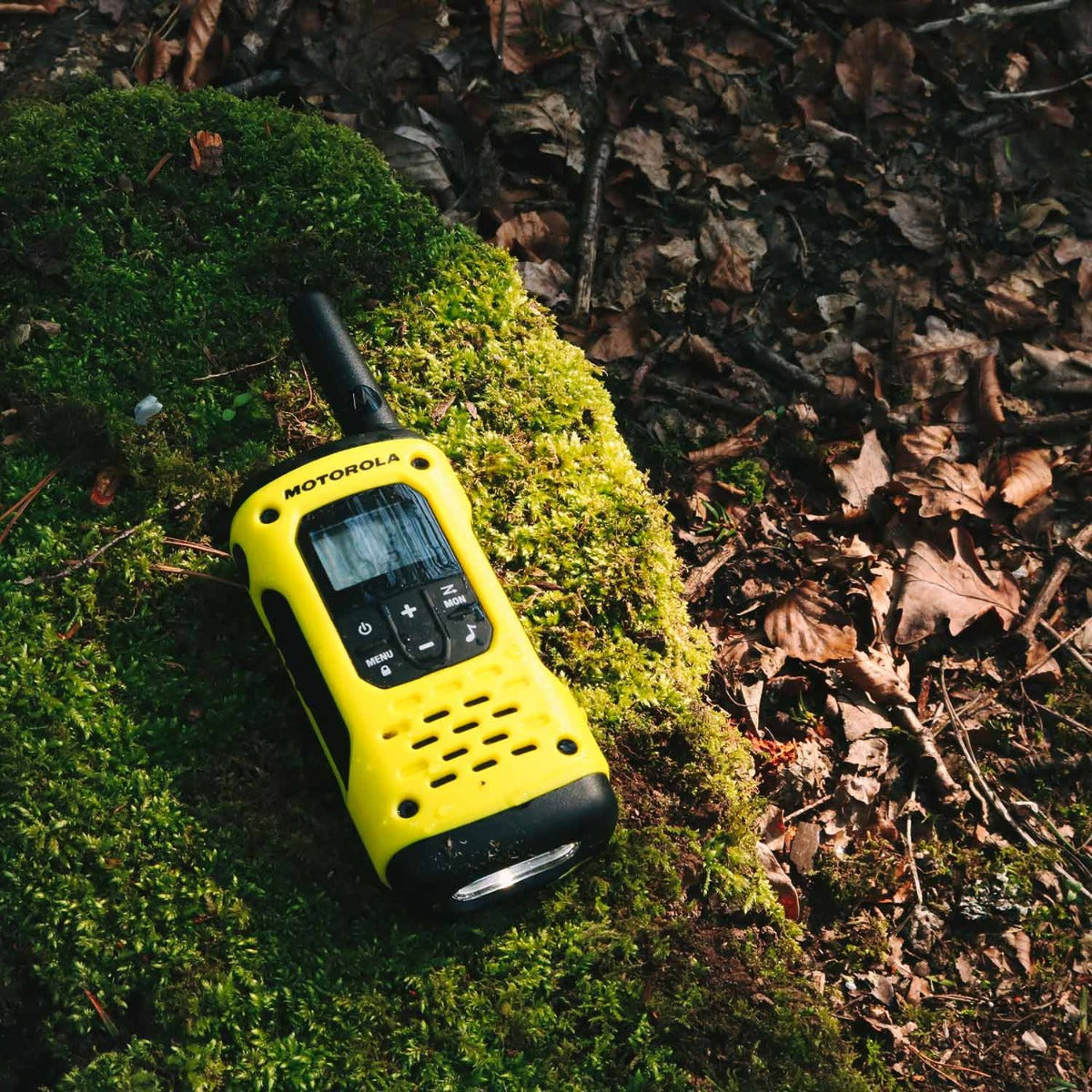
Motorola T92 Walkie Talkies during Ligo testing
Motorola T92 Walkie Talkies during our field testing.

Why we recommend it

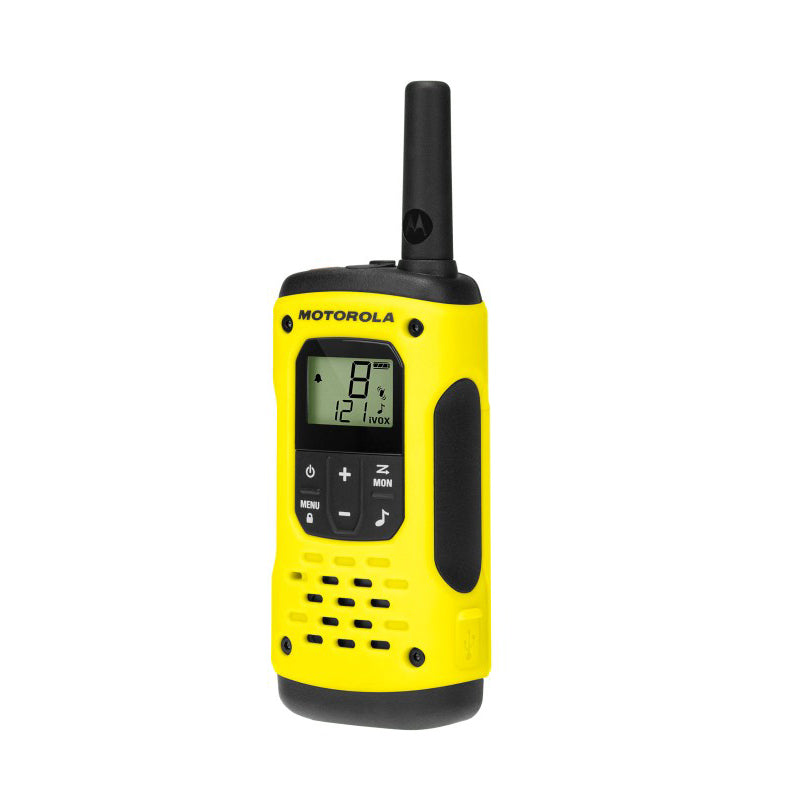
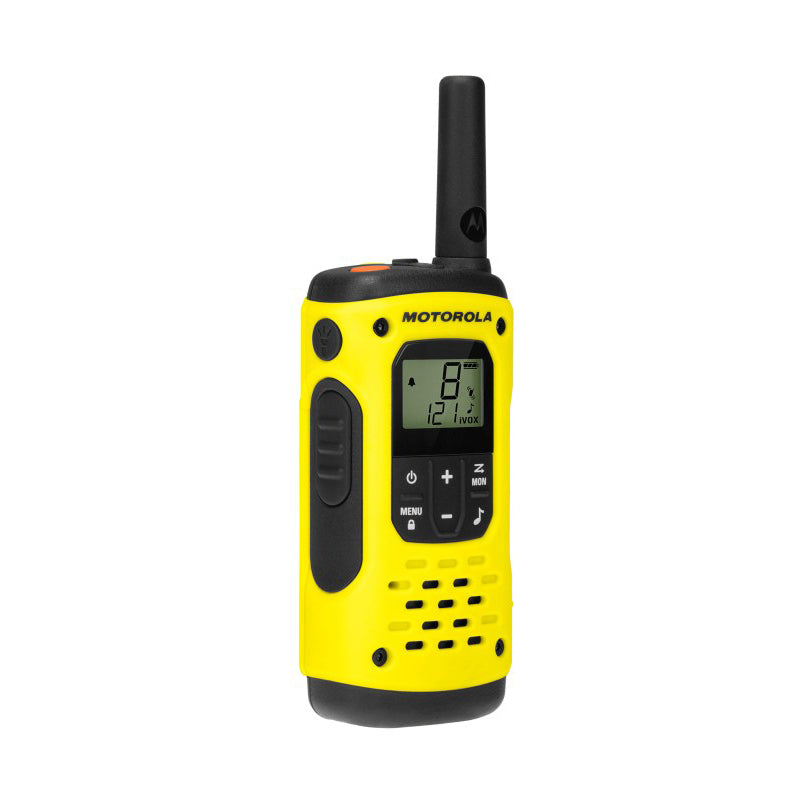
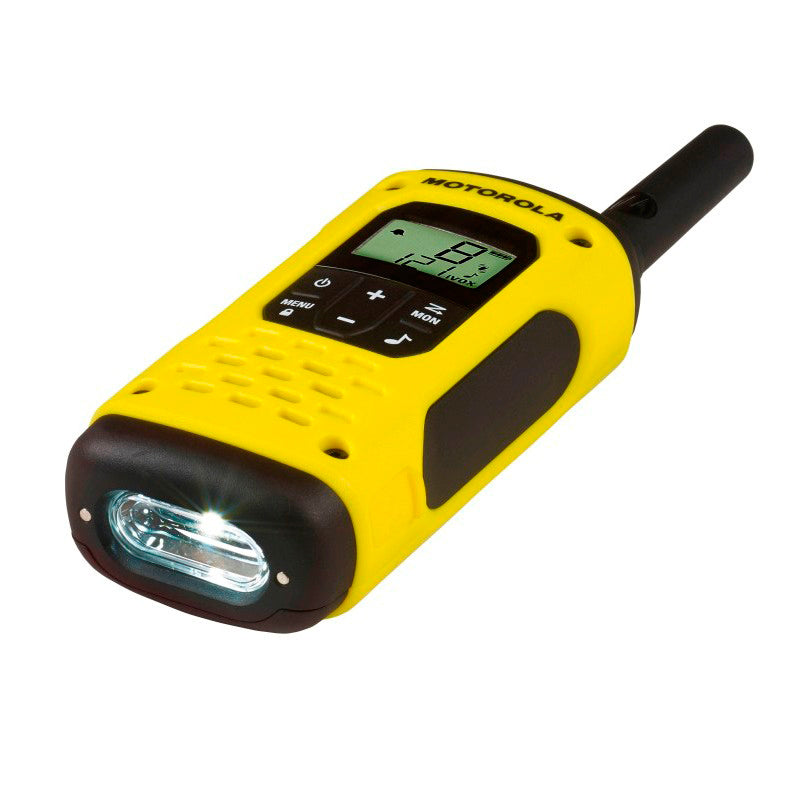
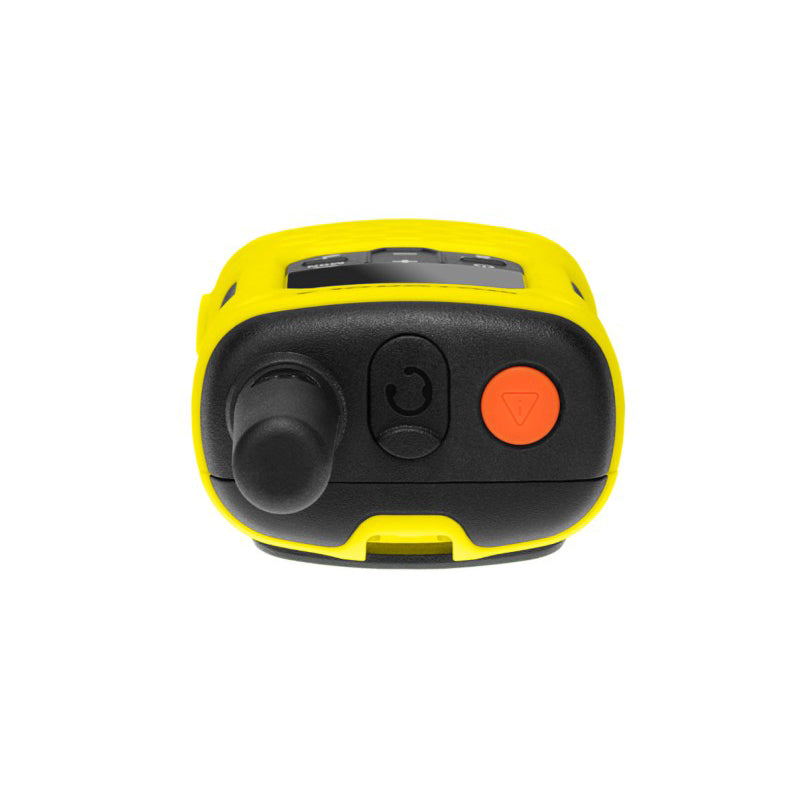
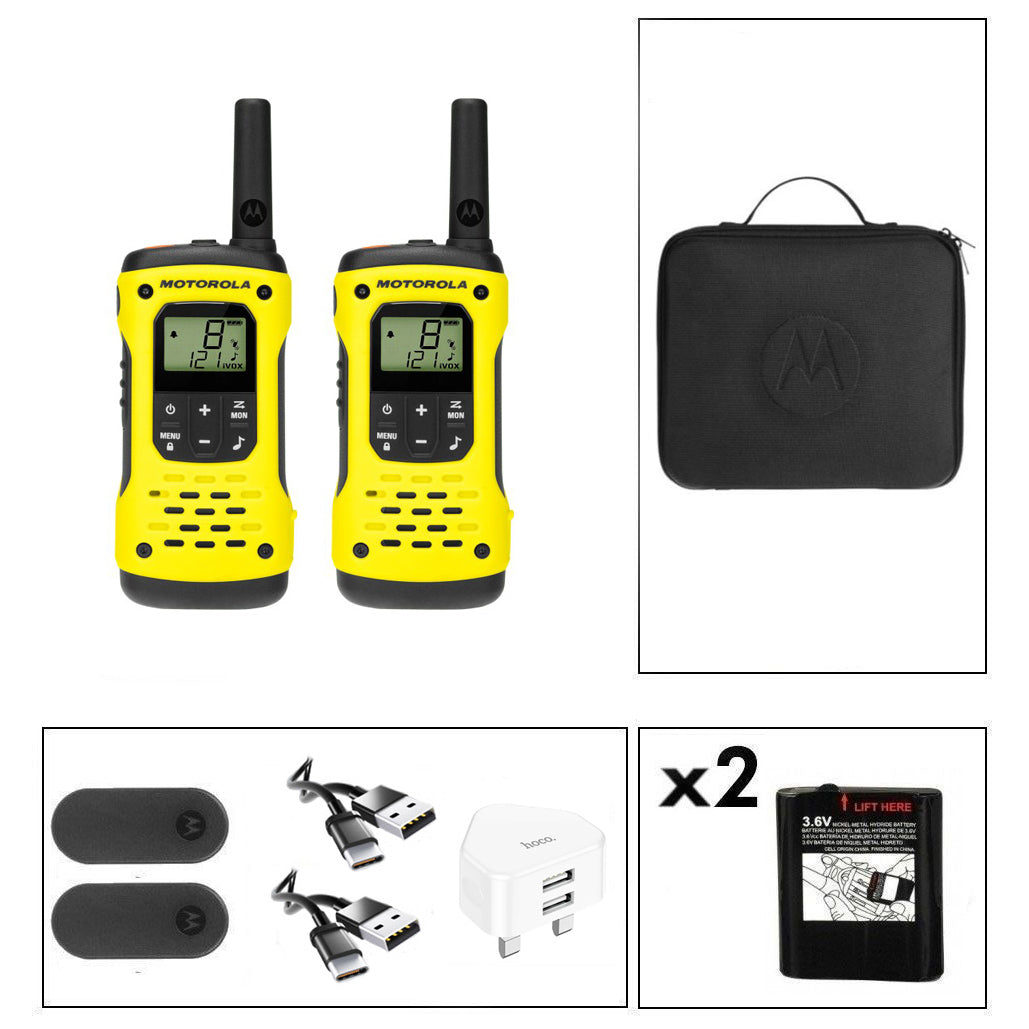
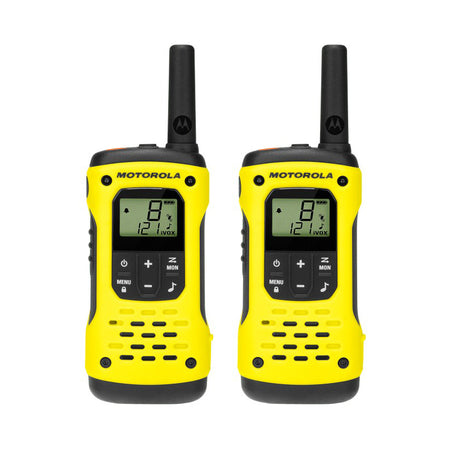
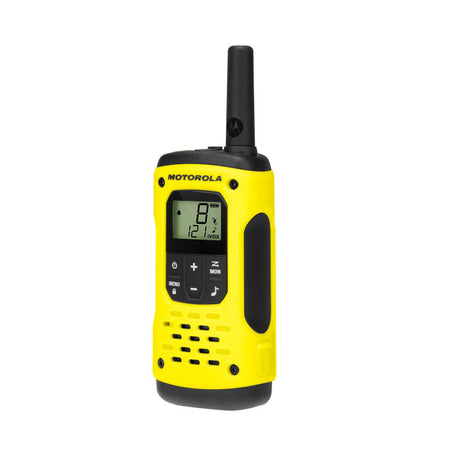
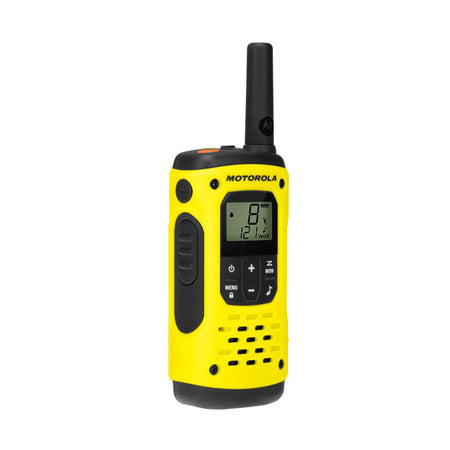
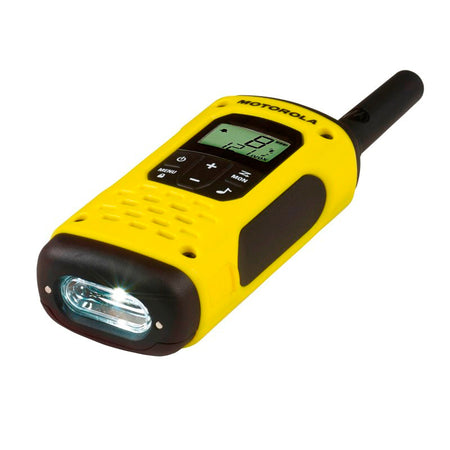
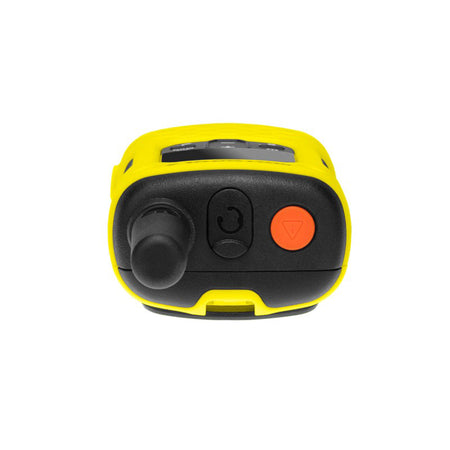
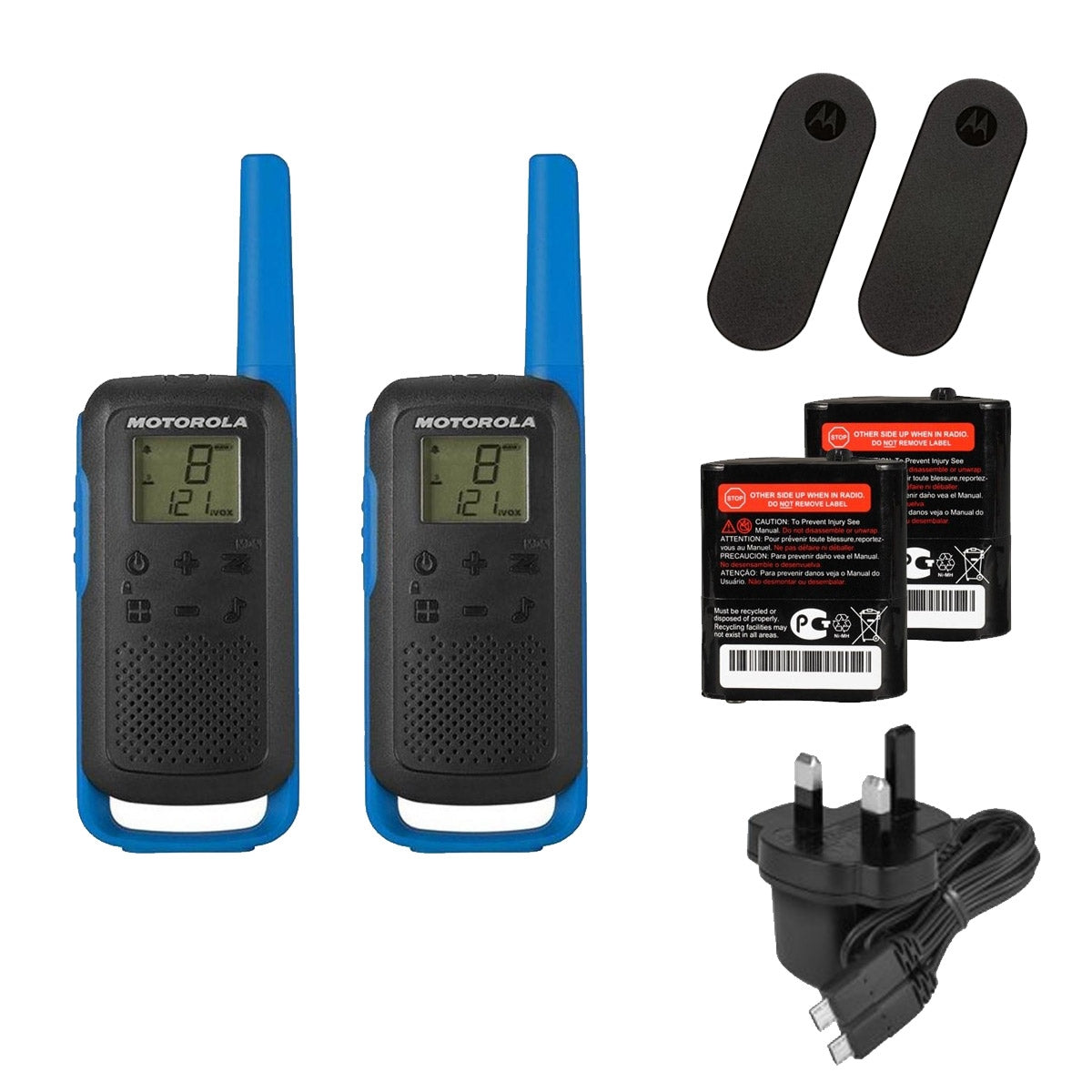
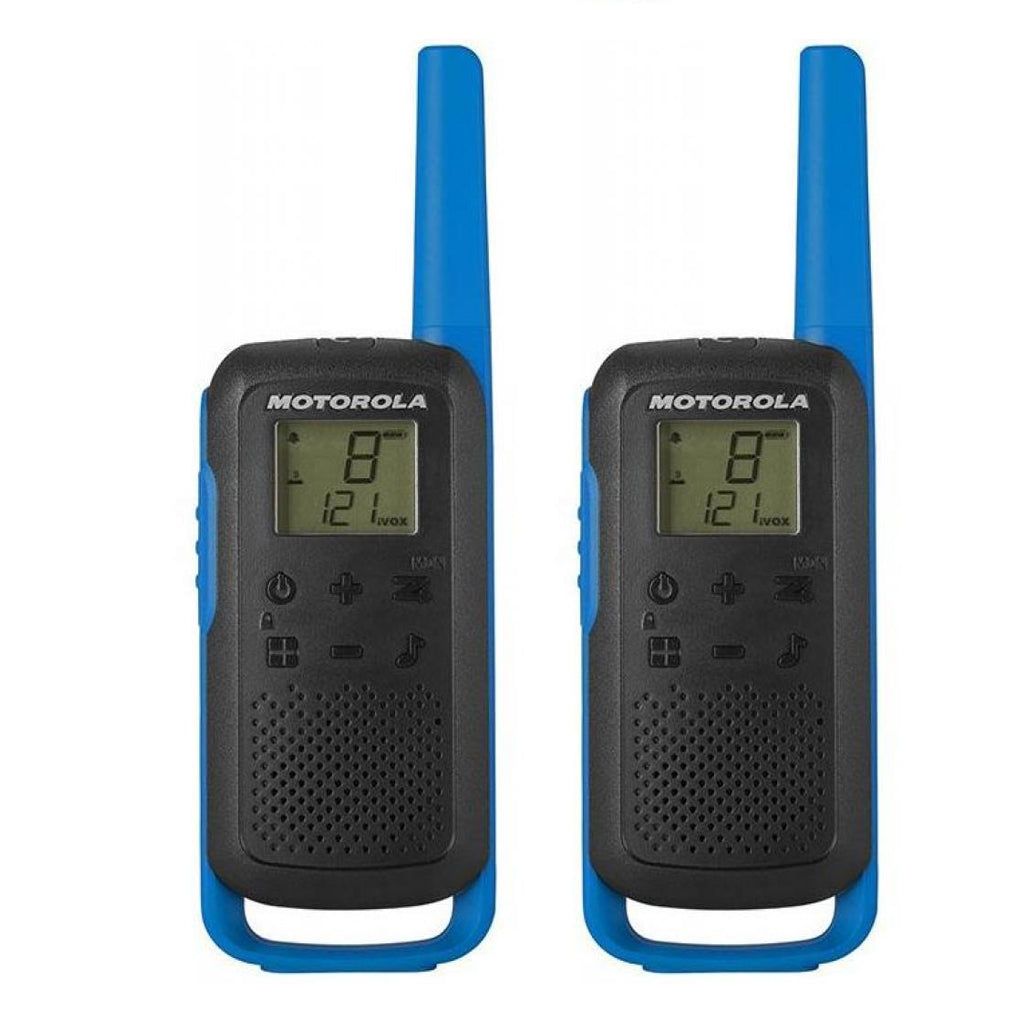
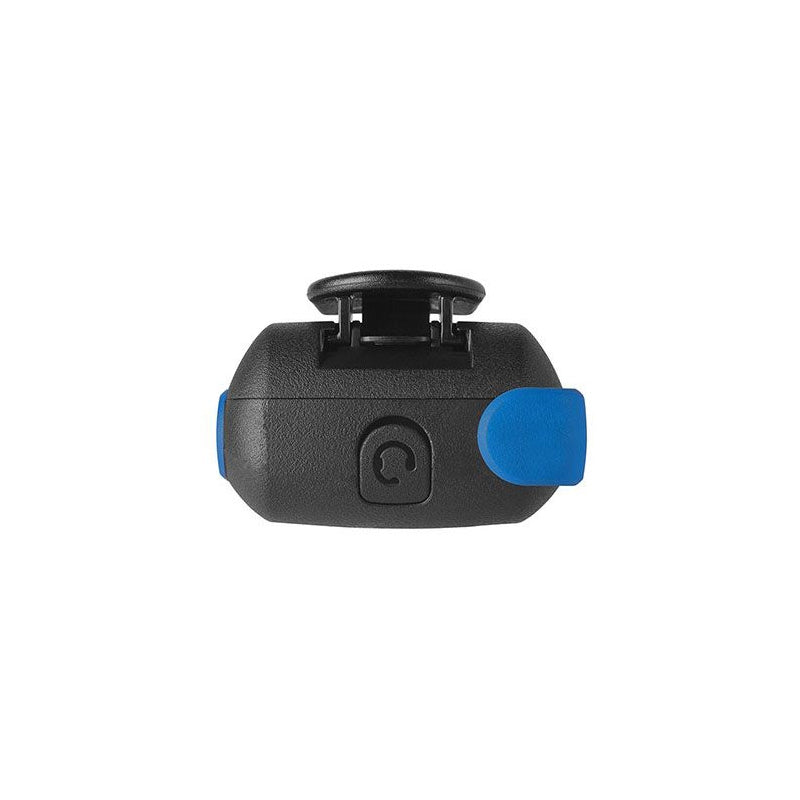
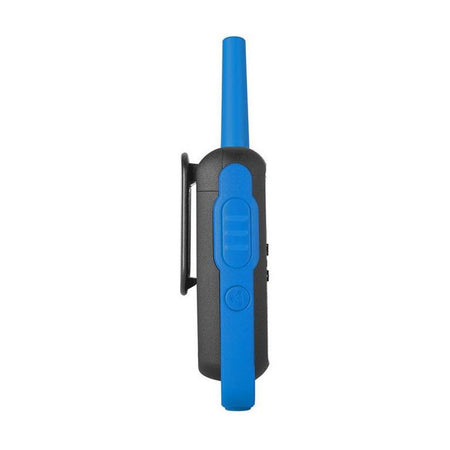
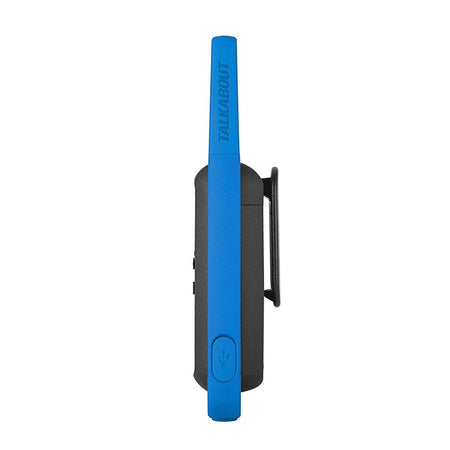
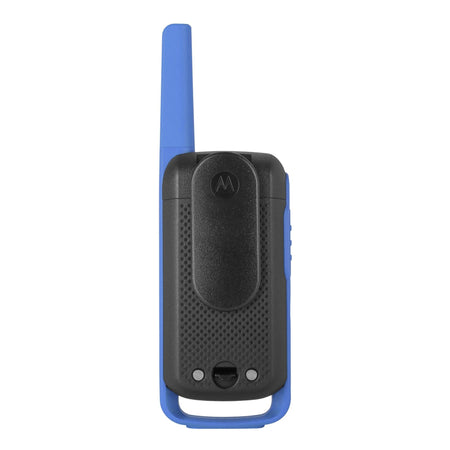
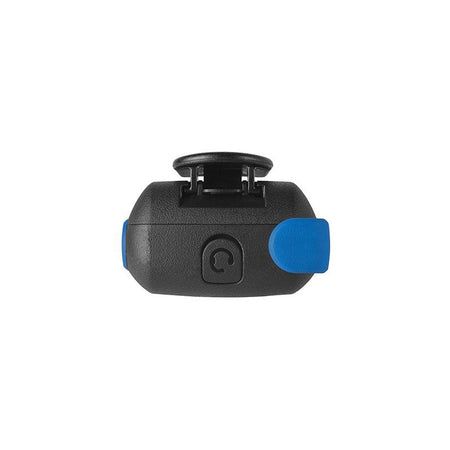
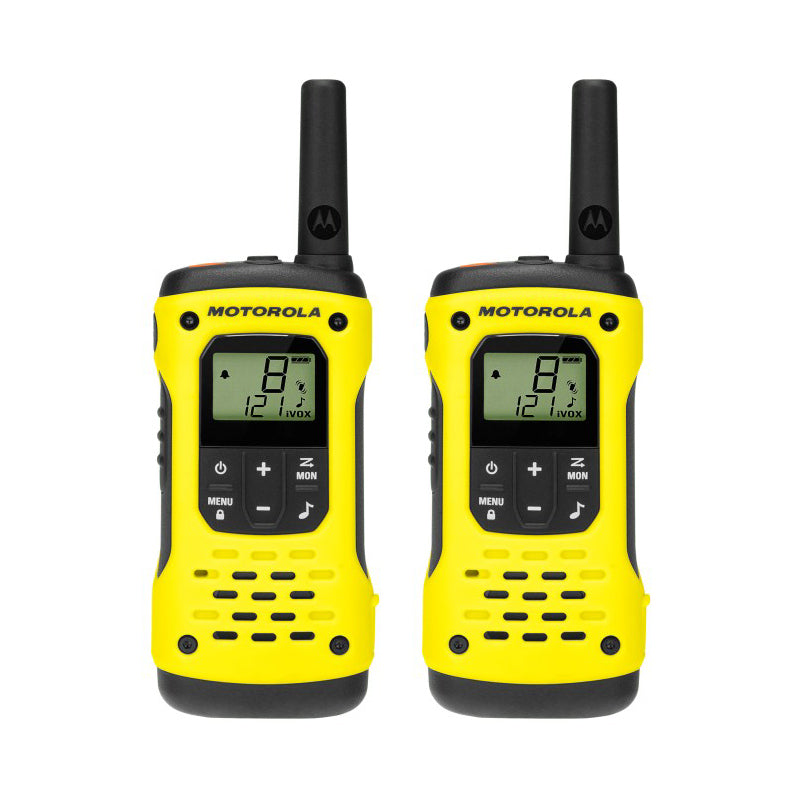
The Motorola TLKR T92 is our best overall walkie talkie because it combines strong real-world performance with the durability and features we want from a radio designed for outdoor use. Its headline specification is a range of up to 10km, but what makes the T92 stand out for us is the overall package. It’s IP67 waterproof, floats when used with the supplied battery, and includes useful outdoor features such as a built-in torch, emergency alert and whistle integrated into the belt clip. There are cheaper walkie talkies if you only need something for occasional family use, but for hiking, camping, watersports and other outdoor activities, we think the T92 offers the best balance of range, ruggedness and usability.

What we found during testing

Range figures for walkie talkies need to be treated with some caution. Motorola quotes up to 10km for the T92, but that’s based on favourable conditions with an unobstructed line of sight; terrain, buildings, trees and interference can reduce the usable range significantly.That’s reflected in our own testing. With one T92 remaining at the liGo office and another taken through the surrounding built-up area, we managed just over 1km before the signal began to break up. Considering the number of buildings and other obstructions between the radios, we were impressed with the result.

We then tested the T92 in more open countryside outside Glasgow, where the difference was considerable. Depending on our position, we achieved up to around 5km. That’s still below Motorola’s headline figure, but much more representative of the sort of range we’d expect in favourable real-world outdoor conditions.

Who's it best for?

We’d recommend the T92 primarily to walkers, hikers, campers and other outdoor users who want a robust licence-free radio they don’t need to be overly precious about. The IP67 protection makes it particularly attractive for activities where rain, mud or accidental immersion are realistic possibilities. Motorola specifies protection against submersion in up to one metre of water for up to 30 minutes when the radio is properly sealed, and the radio floats with the supplied NiMH battery installed.

What we liked

  • Very good real-world range especially away from built-up areas and in more open terrain
  • IP67 waterproofing is much more reassuring (and it also floats making it a great choice for kayaking etc.)
  • Simple, intuitive, easy to use

What to consider

  • Don’t expect 10km in normal conditions. That’s a maximum quoted figure rather than a typical real-world range.
  • It’s more radio than some buyers need. If you’re buying walkie talkies for occasional family use or short distances, one of the cheaper TALKABOUT models may make more sense.

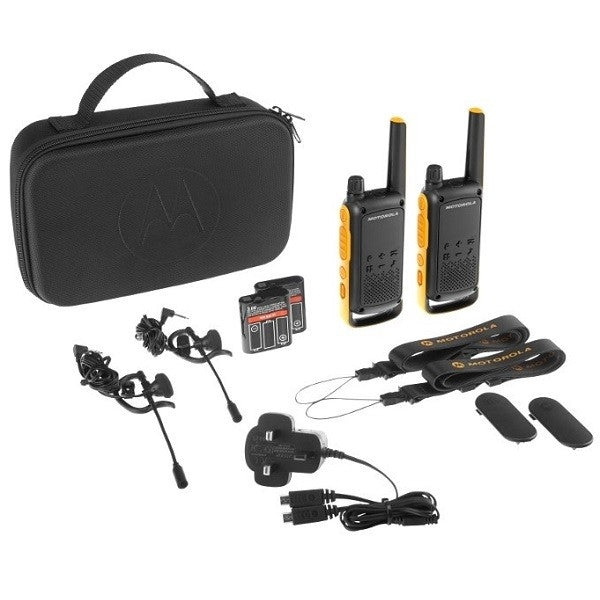
2. Motorola Talkabout T82 Extreme: Best for hiking

Motorola XT185 during liGo field test
RSPB Puffin Jr, Kelvingrove Park.

Why we recommend it

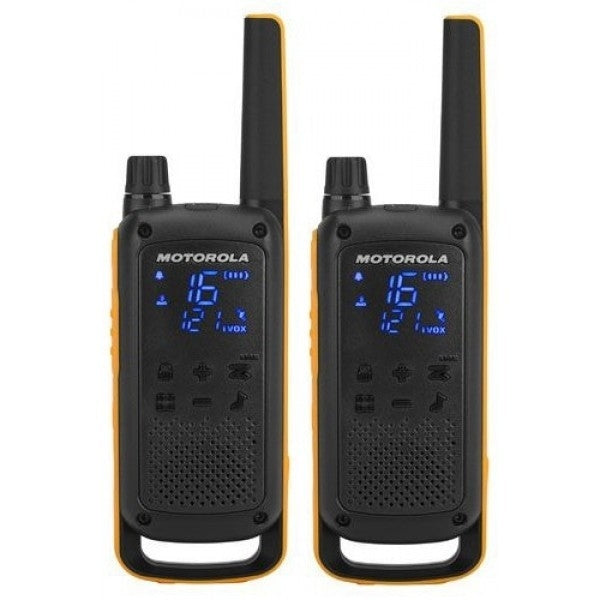
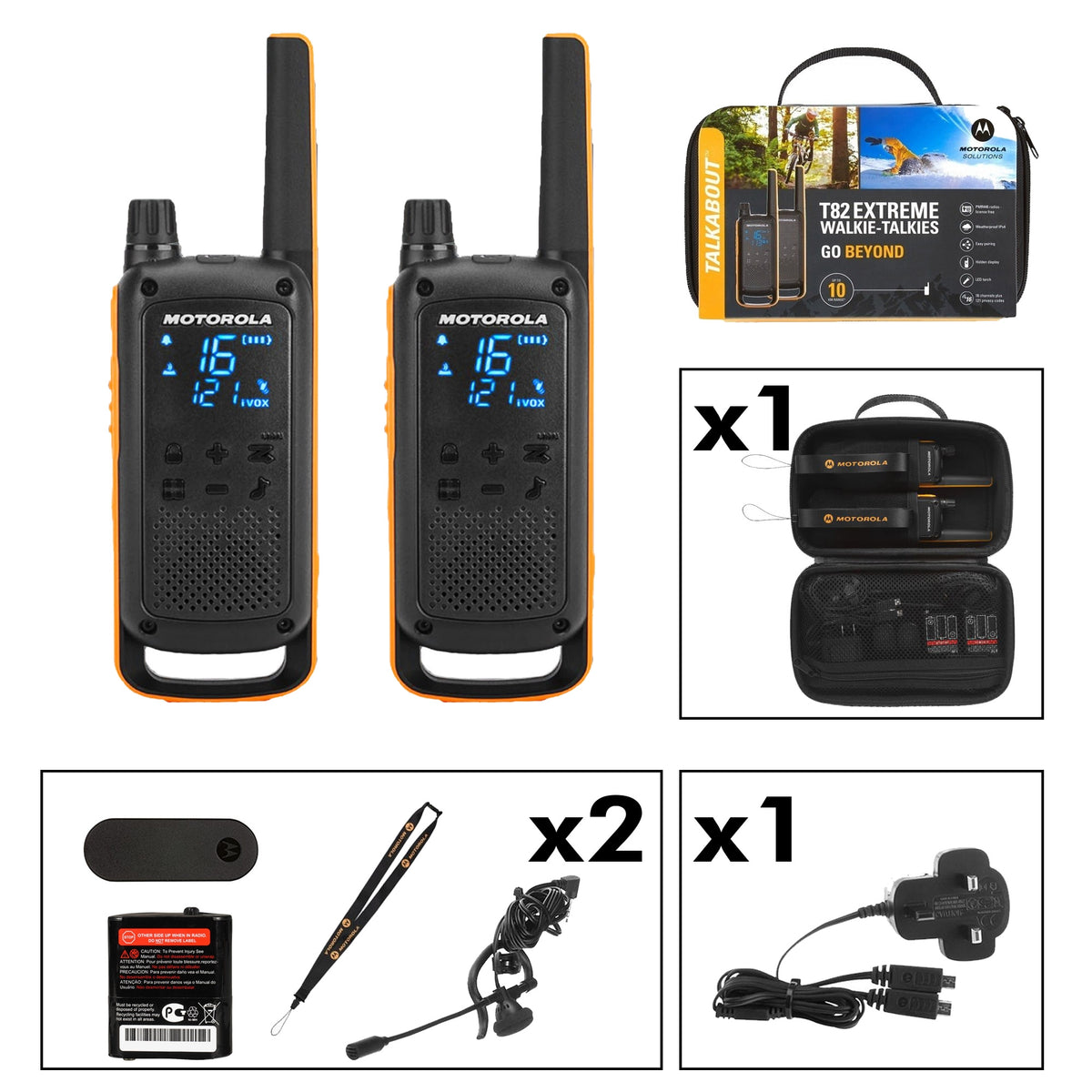
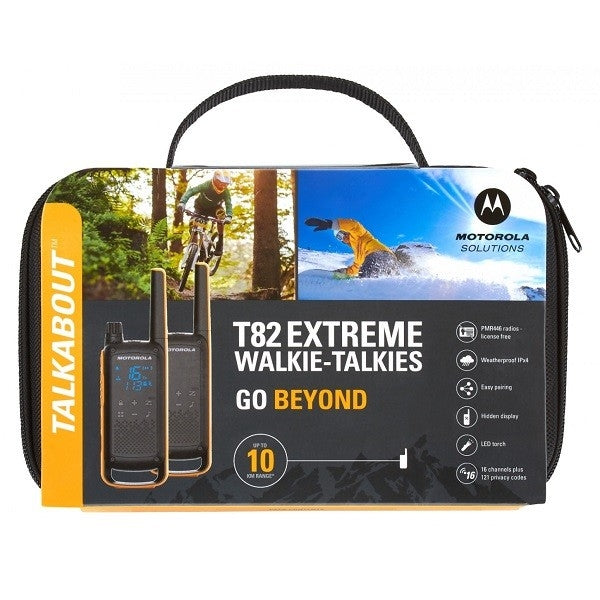
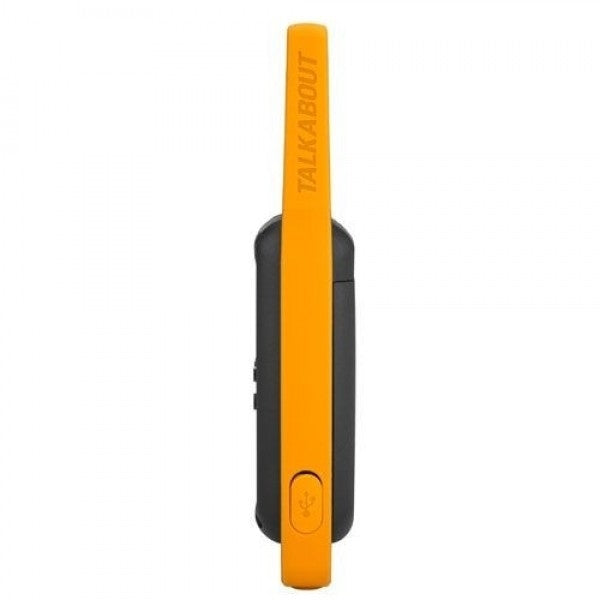
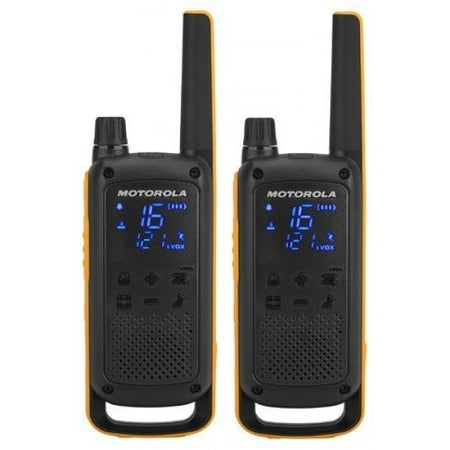
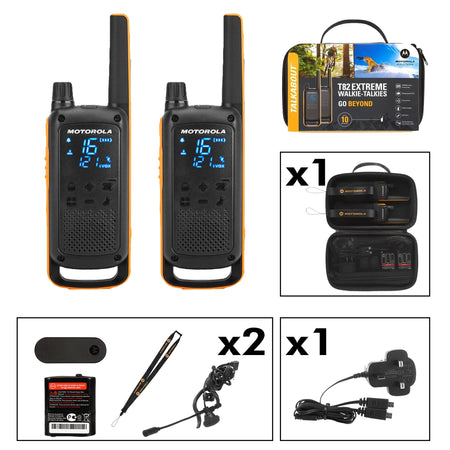
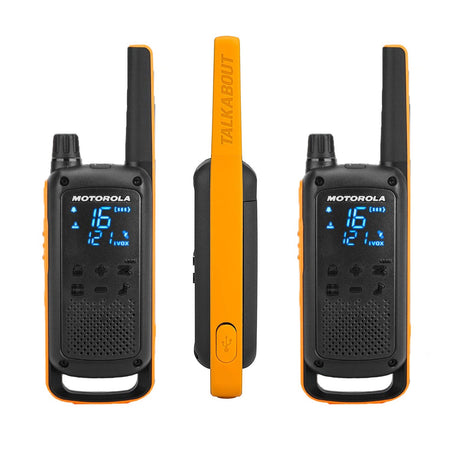
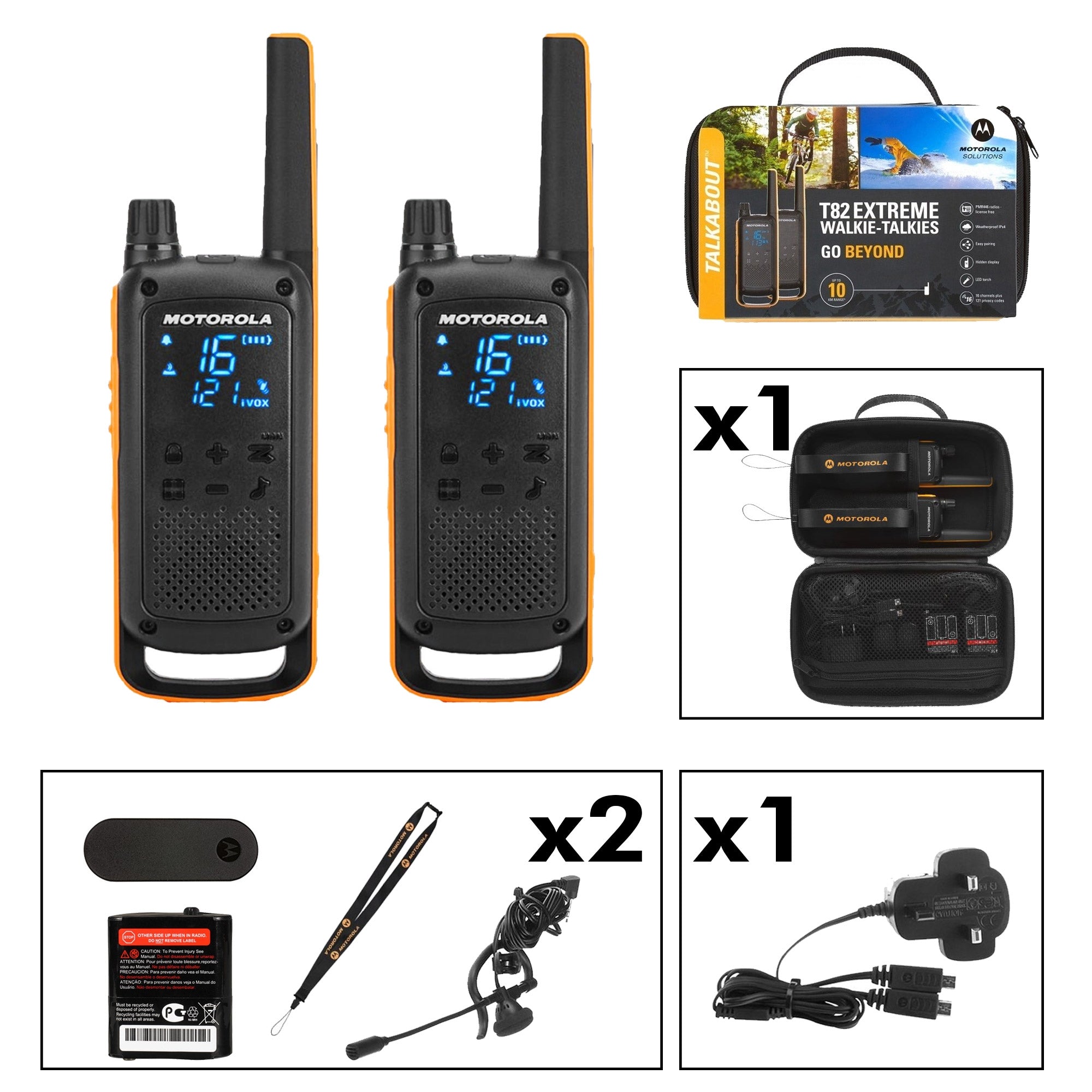
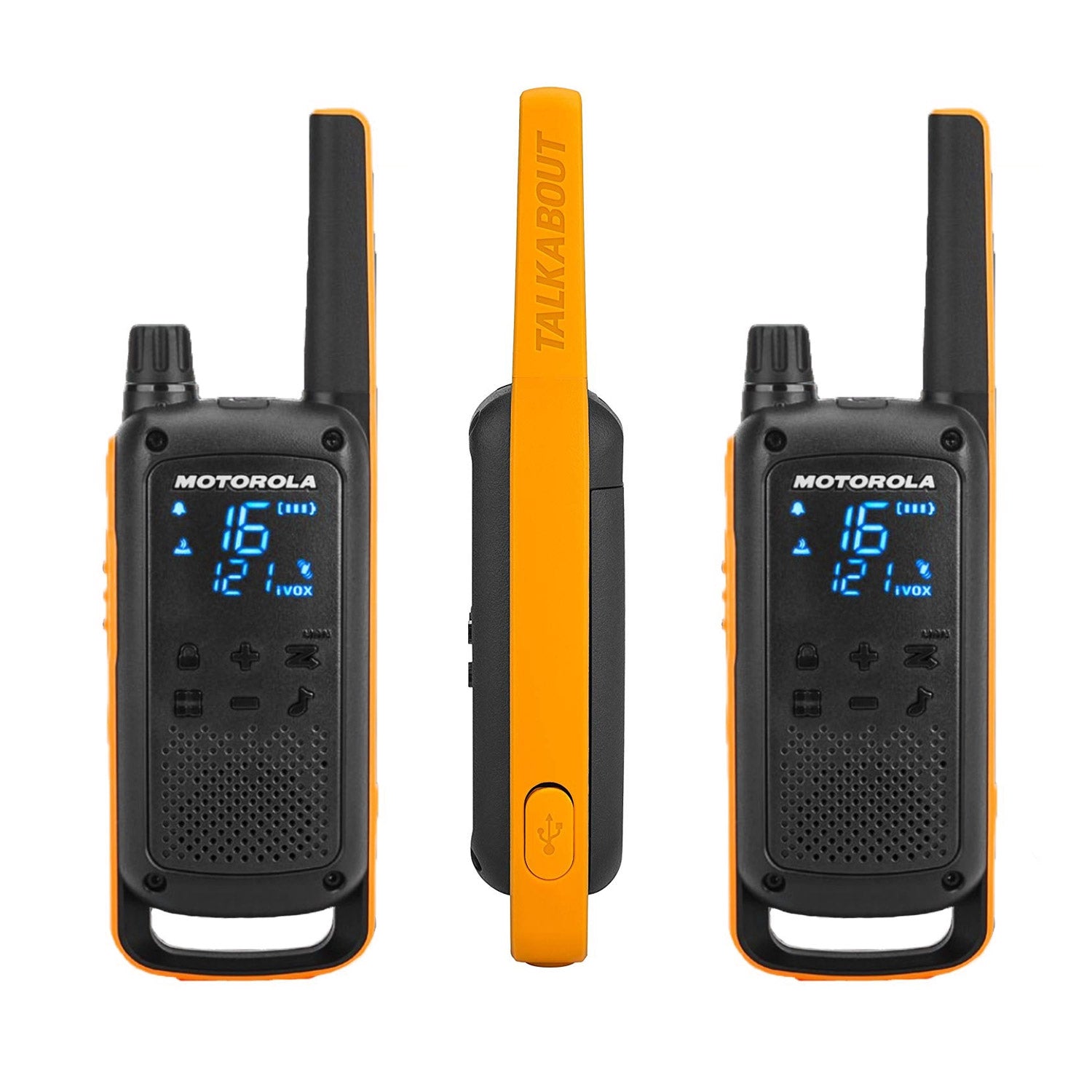
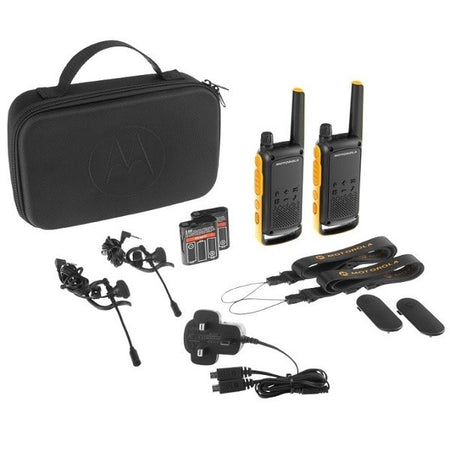
The Motorola TALKABOUT T82 Extreme is our pick for the best walkie talkie for hiking. It combines good real-world range with a durable, weather-resistant design and a useful selection of features for days outdoors. It isn’t as waterproof as the T92 H2O, but for walking and hiking we think it strikes a particularly good balance. The IPX4 construction can cope with rain and splashes, while the belt clips, lanyards and supplied earpieces give you several ways to carry and use the radios on the move. There’s also a built-in torch, which is a useful addition if you’re caught out after dark.

What we found during testing

As with the T92, we found that Motorola’s quoted up to 10km range shouldn’t be treated as the distance you’ll necessarily achieve on every walk. Terrain, buildings, trees and your position relative to the other radio all make a considerable difference. During our testing around Glasgow, the T82 managed around 1km in the city centre, despite the number of buildings obstructing the signal. As we moved into less densely built-up surroundings, that increased to just over 2km. Our testing also reinforced why the T82 is better suited to open outdoor environments, where fewer obstructions give the radios a much better opportunity to perform.

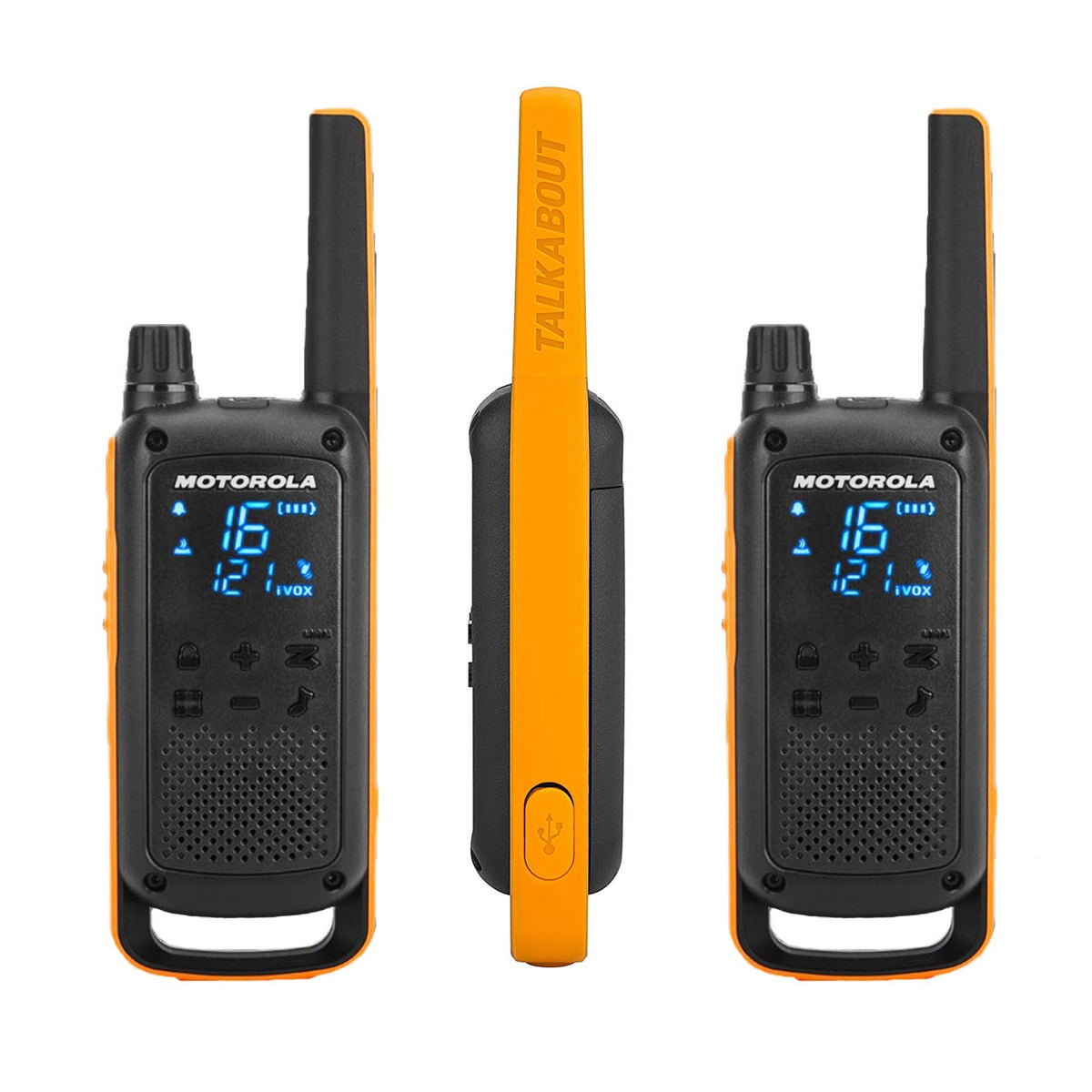
We found the T82 straightforward to use too. The recessed display helps reduce glare while giving the front of the radio some protection, and Easy Pairing removes much of the hassle of getting multiple handsets onto the same channel. We also liked the shape of the handset: the opening at the base gives you an obvious place to grip it when picking it up or carrying it.

Who's it best for?

We’d recommend the T82 Extreme to walkers, hikers and campers looking for a dependable outdoor radio. If you’re regularly around water or want something capable of surviving accidental immersion, we’d spend more on the T92. For general hiking and hillwalking, however, we think the T82 Extreme hits a very useful middle ground.

What we liked

  • Good real-world range
  • Built-in LED torch
  • Reliable weather protection
  • Useful accessories

What to consider

  • Not fully waterproof
  • At 197g per radio, it's not the lightest option.
  • Micro-USB charging: increasingly dated

3. Cobra PX650: Best for for larger teams & workplaces

Cobra PX650 during testing at liGo warehouse, Glasgow

Why we recommend it

The Cobra PX650 is our pick for larger teams because it has been designed specifically around workplace communication. Rather than adding lots of recreational features, Cobra has concentrated on making it straightforward to carry, operate and keep charged throughout a working day. It’s available in two-handsets up to a twelve-pack supplied with 2x six-port charging docks. That makes it ideal for workplaces with several people that might need to use radios at the same time.

What we found during testing

In use, one of the things that stands out about the PX650 is its simplicity. There isn’t a large display or complicated collection of controls to work through, and the radio has been designed for one-handed operation. For a team sharing radios between different members of staff, that’s arguably more useful than having a long list of additional features. We also liked the relatively compact design. Each radio weighs around 114g, and the supplied 180-degree swivel holster makes it easy to keep attached to a belt or workwear while still being accessible when needed. The IP54 rating also provides protection against dust and splashes, although this shouldn’t be confused with the full waterproofing offered by something like the Motorola T92 H2O.

Who's it best for?

The PX650 makes most sense for warehouses, retail teams, hospitality, schools and other workplaces where several members of staff need a simple way to stay in contact.

What we liked

  • Ideal for larger teams
  • Up to 18-hour battery
  • Six-port charging option

What to consider

  • More work-focused than recreational
  • No LCD display can be less user-friendly for some
  • 12km maximum stated range unlikely in built-up warehouses, commercial areas

4. Motorola Talkabout T62: Best value

Motorola Talkabout T62 during liGo field test
Motorola Talkabout T62

Why we recommend it

The Motorola Talkabout T62 is our best value pick because it gets the basics right at a more accessible price than Motorola’s more rugged outdoor models. It’s easy to use, rechargeable and offers enough range for everything from family camping trips and holidays to days out and general outdoor use. You don’t get the weather protection of the T82 Extreme or T92 H2O, but not everybody needs it. If you mainly want a reliable pair of walkie talkies for occasional outdoor use, the T62 offers a particularly good balance between performance, features and price.

What we found during testing

Motorola quotes a maximum range of up to 8km, although (as with every radio in this guide) the actual distance you can achieve will depend heavily on your surroundings. In our own testing, we managed around 800 metres in a built-up city-centre environment before the signal started to drop. Taking the radios into the countryside made a significant difference, where we comfortably achieved between 3–4km. That’s a useful demonstration of just how much buildings and other obstructions can affect walkie-talkie range. We also found the T62 exceptionally straightforward to operate. Easy Pairing lets you quickly get compatible radios onto the same channel, while the controls and backlit display are simple enough that you shouldn’t need to spend much time with the instructions before getting started.

Who's it best for?

We’d recommend the T62 for families, campers and occasional outdoor users who want something better than an entry-level walkie talkie without spending significantly more on features they may not need.

What we liked

  • Very easy to use
  • Good value
  • Clear backlit display

What to consider

  • Not weatherproof
  • Less rugged than T82/T92

5. Motorola TLKR T42: Best walkie talkies for kids

RSPB Avocet 8x42 Binoculars during liGo field test
RSPB Avocet 8x42 Binoculars during liGo field test. Hellvellyn, Lake District

Why we recommend it

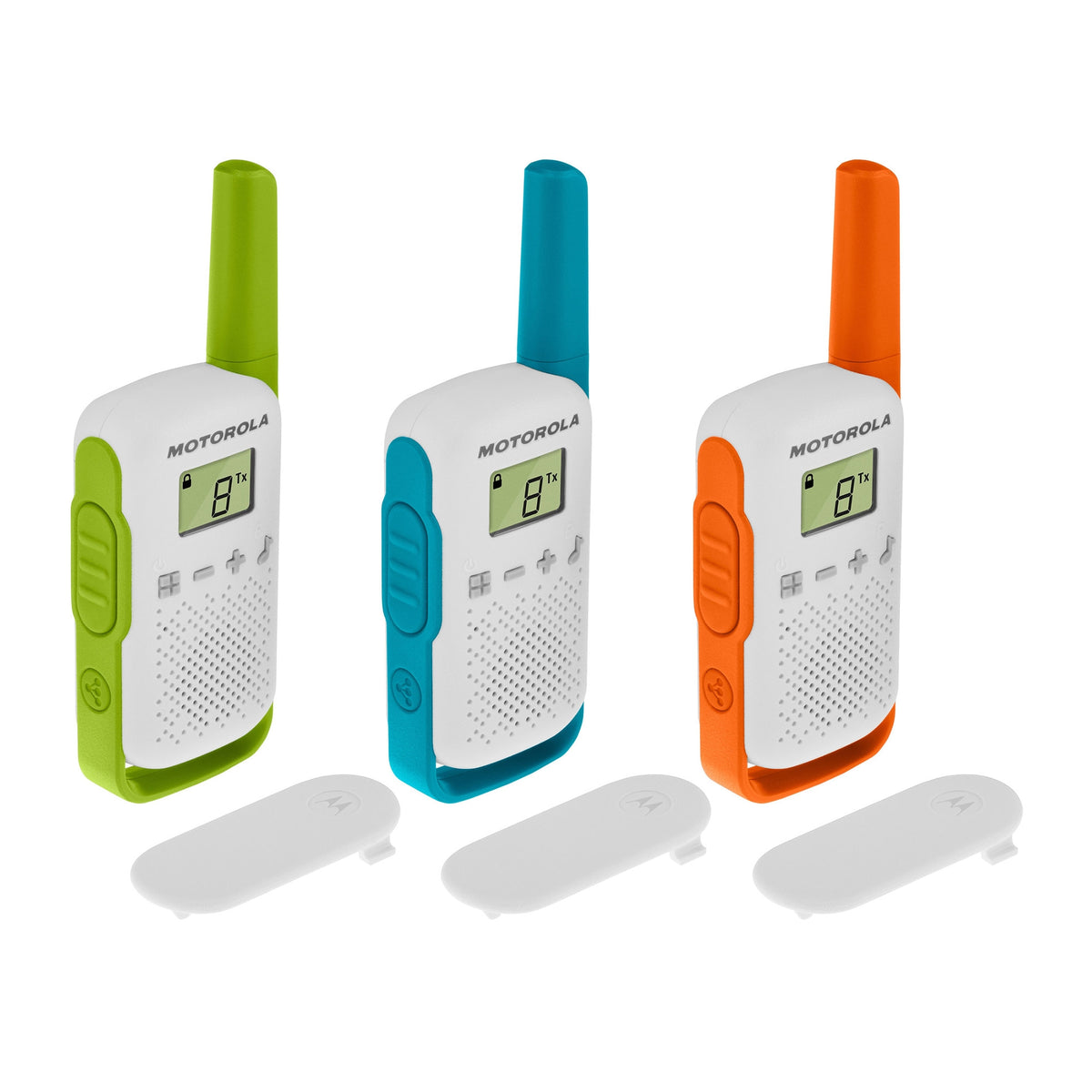
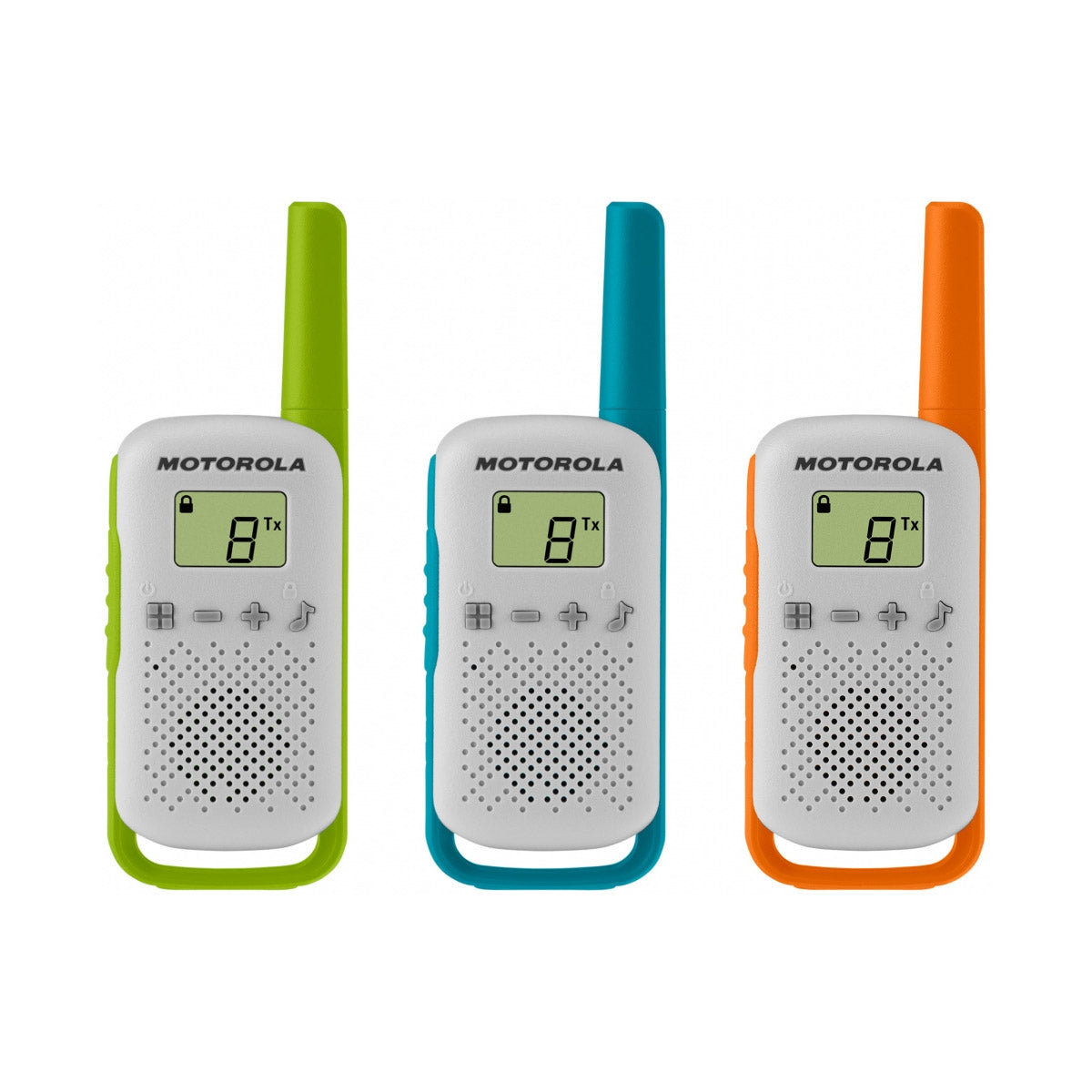
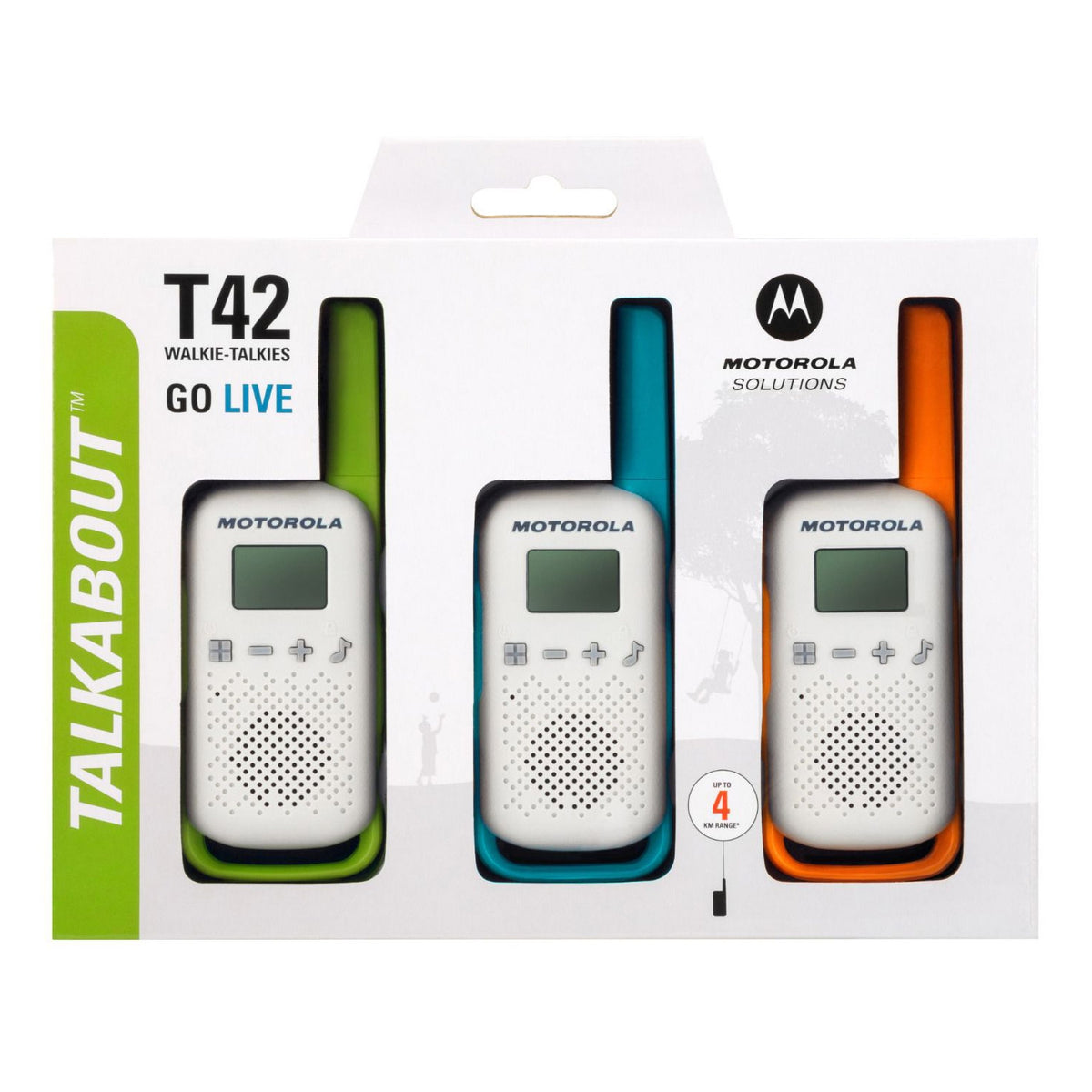
The Motorola Talkabout T42 is our pick for the best walkie talkie for kids. It’s small, lightweight and deliberately simple, making it a much better starting point for younger users than the more feature-heavy radios elsewhere in this guide. Motorola has kept the controls straightforward, while Easy Pairing makes it quick to get multiple radios communicating on the same channel. They’re also available in several colours and come with personalisation stickers, which adds a little more appeal for children. Make no mistake though, these are proper licence-free PMR446 two way radios rather than toys, which makes the T42 a good choice for family holidays, campsites or simply keeping in touch around the house and garden.

What we found during testing

The biggest strength of the T42 in our testing was how easy it is to use. There are relatively few controls to learn, the push-to-talk button is easy to find, and Easy Pairing means children shouldn’t need much help getting the radios set up once they’ve been shown how they work. Motorola quotes a maximum range of up to 4km, but we wouldn’t buy the T42 expecting to achieve that regularly. In our testing, it maintained a steady connection over shorter distances, which is really where this model is designed to be used.

Who's it best for?

We’d recommend the T42 for children and families looking for a simple, inexpensive set of walkie talkies for shorter-range use.

What we liked

  • Small, lightweight, and pleasing colours
  • Very easy to use
  • Good value

What to consider

  • Shorter range
  • Not weatherproof
  • No batteries included

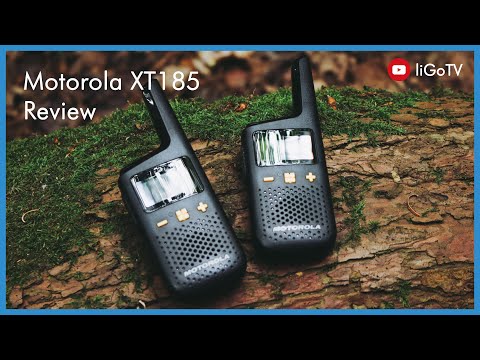
6. Motorola XT185: Best for work & small businesses

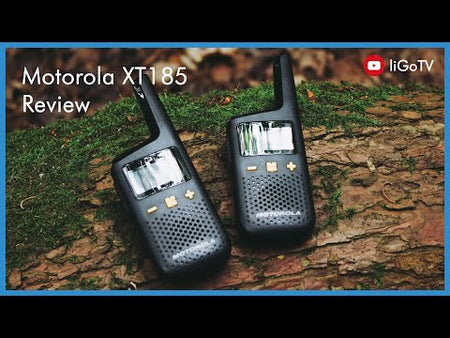
Motorola XT185 during liGo field test

Why we recommend it

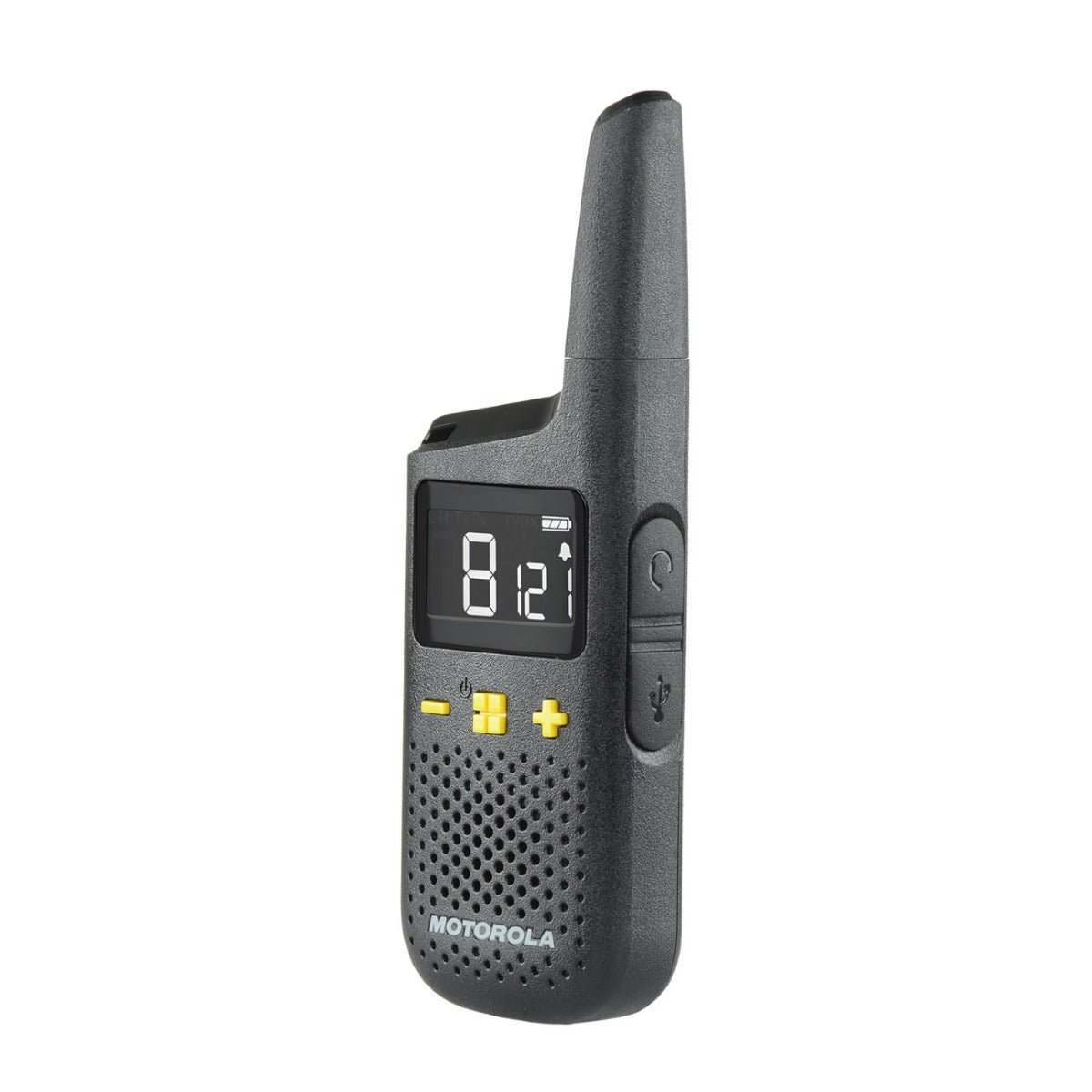
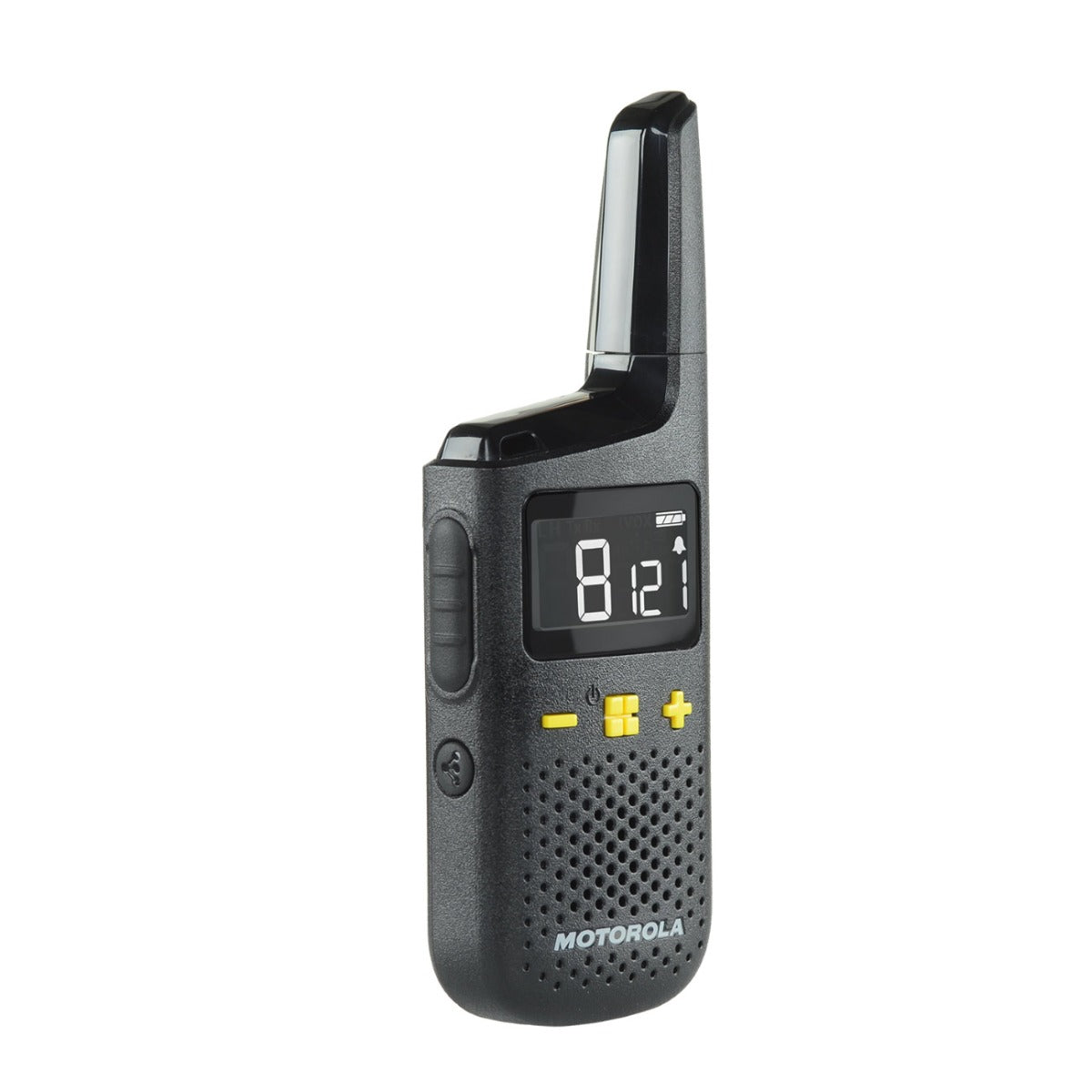
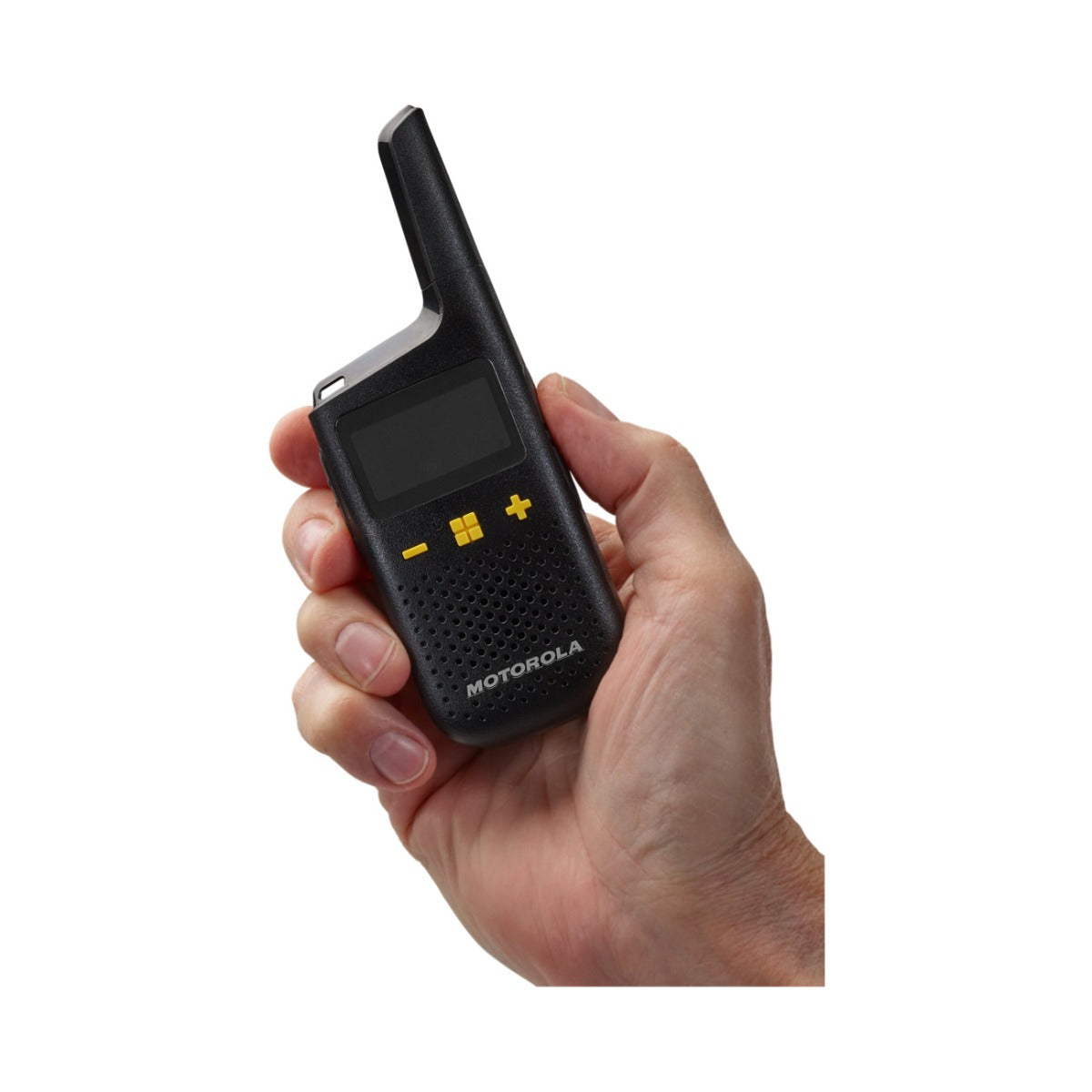
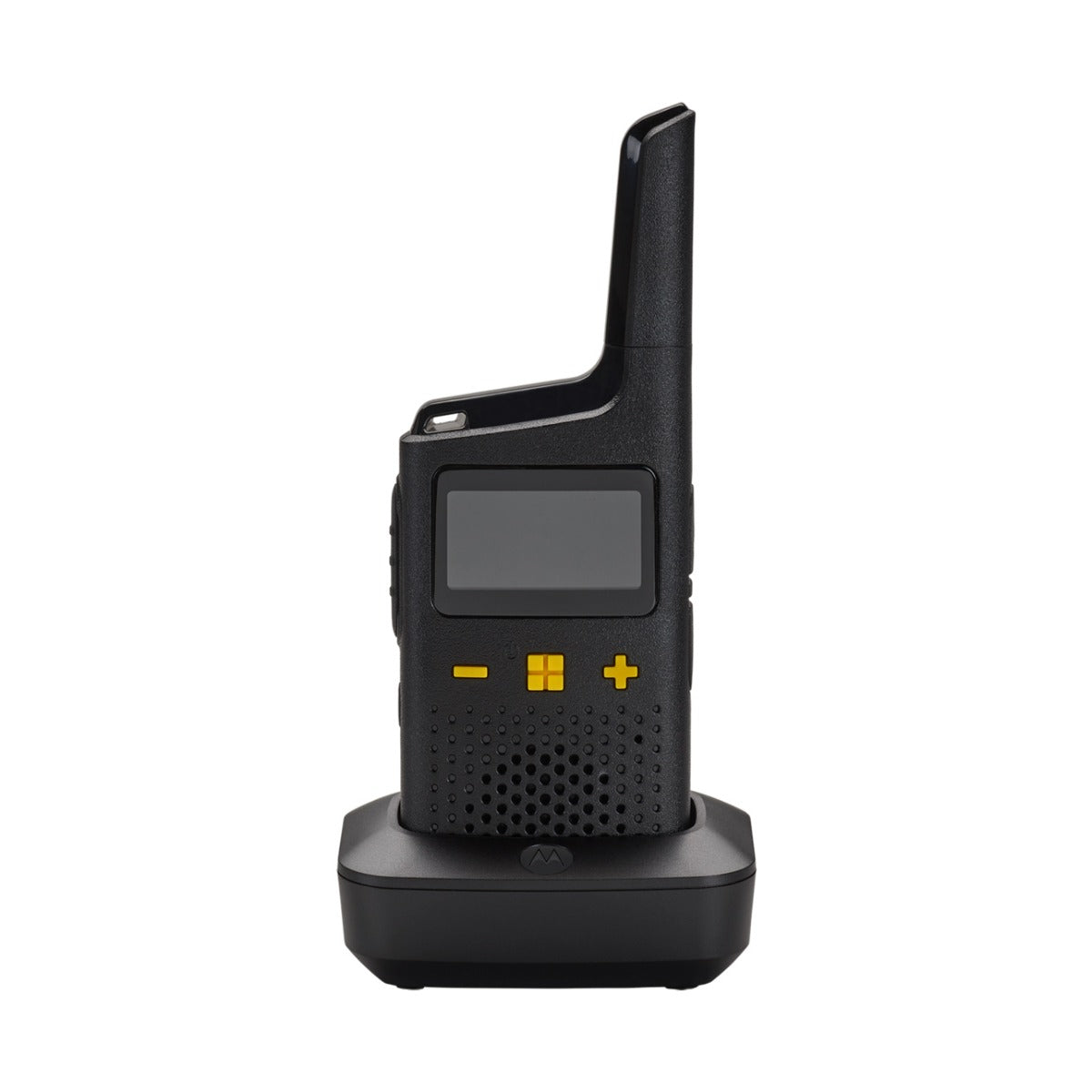
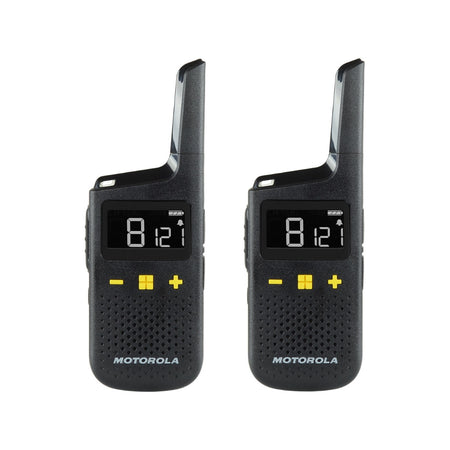
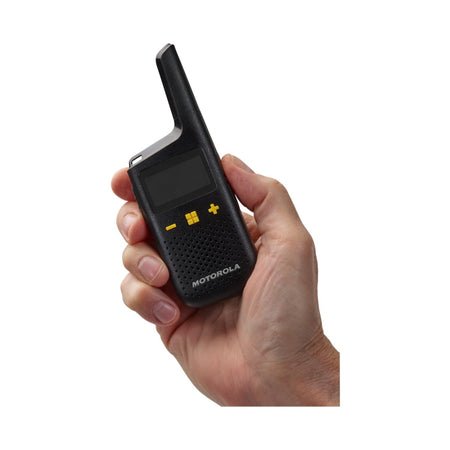
The Motorola XT185 is our pick for small businesses because it combines a compact, lightweight design with the features most teams actually need for everyday communication. It’s licence-free, straightforward to operate and supplied with charging docks, so there’s very little involved in getting a couple of radios set up and ready for work. It’s also considerably smaller than many traditional business radios. At around 100g including the battery, it’s light enough to clip onto a belt or clothing throughout a shift without becoming cumbersome. Despite that small size, it still has an IP54 rating for protection against dust and water ingress.

What we found during testing

The compact size was one of the first things we noticed when we tested the XT185. It’s noticeably smaller and more streamlined than the older XT180, making it easy to slip into a pocket or carry using the supplied belt clip. We were impressed by the audio too: even at relatively low volume it was plenty loud enough for casual use, with considerably more volume available for noisier surroundings. We also found the controls simple to use. The push-to-talk button is large and easy to locate, while VOX worked particularly well during our test, picking up speech clearly without being overly sensitive to pauses. Easy Pairing is another useful addition when you’re setting up several radios for a team.

Who's it best for?

We’d recommend the XT185 for smaller businesses that need simple, reliable communication between members of staff. Shops, cafés, smaller warehouses, schools and other workplaces where people regularly move between different areas are all good examples.

As with the other radios in this guide, the stated maximum range of up to 8km is only achievable in ideal conditions, with open space and a clear line of sight. In buildings and built-up areas, you can expect considerably less. In our own testing, we achieved just under 1km in a built-up area.

What we liked

  • Compact and lightweight
  • Clear, loud audio
  • IP54-rated
  • Charging docks included

What to consider

  • That 8km is a maximum
  • Not fully waterproof
  • Basic menu takes some learning

How to choose walkie talkies

Think about where you’ll use them

Start with the environment. A simple radio such as the Motorola T42 or T62 can be perfectly adequate for family holidays and campsites, while regular hikers may benefit from the additional weather protection of the T82 Extreme. If you’re likely to use your radios around water, the waterproof T92 H2O makes considerably more sense.

Don’t rely on the maximum range

Manufacturer range figures are measured under favourable conditions and shouldn’t be treated as the distance you’ll achieve in everyday use. Buildings, trees, hills and other obstructions can significantly reduce range. In our own testing, we’ve typically achieved much greater distances in open countryside than in built-up areas.

Consider battery life and charging

If you’re only using your radios occasionally, battery life may not be a major concern. For longer days outdoors or workplace use, it’s worth looking at both runtime and how the radios are charged. Some models can also use standard AA or AAA batteries, which can be useful when you’re away from a power source.

Look at weather protection

Not every walkie talkie is weatherproof. An IP rating is worth paying attention to if you’ll regularly use your radios outdoors. There’s also an important difference between a radio that can withstand rain and splashes and one designed to survive immersion in water.

Think about how you’ll carry them

Weight and size matter more than they might appear on paper, particularly if you’re carrying a radio all day. Belt clips, lanyards and earpieces can also make a difference when hiking or working.


Frequently asked questions

Do you need a licence for walkie talkies in the UK?

Not necessarily. All of the walkie talkies featured in this guide use PMR446, which can be used in the UK without purchasing a radio licence, provided the equipment meets the relevant requirements. PMR446 radios are limited to low-power, short-range communication and are used by both consumers and businesses. More powerful professional two-way radio systems may require an Ofcom licence, so check the requirements before buying radios outside the licence-free PMR446 category.

How far do walkie talkies actually work?

It depends heavily on where you’re using them. Manufacturers may quote maximum ranges of 8km, 10km or even 12km, but these figures assume favourable conditions with very few obstacles between the radios. In towns and cities, buildings can reduce the usable range considerably. Hills, dense woodland and other obstacles can have a similar effect. Open countryside with a clear line of sight generally gives you the best range. That’s why we test walkie talkies in real-world conditions rather than judging them solely on the maximum range printed on the box.
What does PMR446 mean?

PMR446 is a licence-free radio system operating around the 446MHz frequency band. In the UK, compliant PMR446 radios are handheld, low-power devices with a maximum permitted power of 500mW ERP. It’s commonly used for walkie talkies because there’s no subscription or call charge and, unlike a mobile phone, communication doesn’t depend on having a mobile signal.
Can different brands of walkie talkies communicate with each other?

Usually, yes. Compatible analogue PMR446 radios can generally communicate when they’re set to the same channel and compatible settings, so you don’t necessarily need to use the same brand or model. Features can differ between manufacturers, though, and settings such as CTCSS/DCS codes need to match if you’re using them. These so-called “privacy codes” don’t encrypt your conversation, they simply prevent you from hearing other transmissions that aren’t using the corresponding code. PMR446 spectrum is shared with other users.

What are the best walkie talkies for hiking?

Our pick for hiking is the Motorola TALKABOUT T82 Extreme. It offers a good balance of usable range, durability and portability, with an IPX4 weather-resistant design that’s well suited to walking and hiking in changeable conditions.


Which binoculars should you buy?

For most people, our top pick is the Motorola T92. It combines good real-world range with straightforward controls and excellent weather protection, making it a dependable choice for regular outdoor use.

That doesn’t necessarily mean it’s the right radio for everyone. If you’re mainly walking and hiking, we’d choose the Motorola T82 Extreme, while the Motorola T62 is our recommendation if you want a capable pair of walkie talkies at a more affordable price. For children and family use, the simple and lightweight Motorola T42 makes more sense. For workplace communication, we’d look beyond the TALKABOUT range. The Motorola XT185 is our choice for smaller businesses, while the Cobra PX650 is better suited to larger teams, particularly where several radios need to be kept charged and ready for different members of staff.

Ultimately, there isn’t one walkie talkie that’s best for every situation. Think about where you’ll use your radios, how much weather protection you need and how many people need to stay in contact. Those factors are generally more useful when choosing than simply buying the model with the longest claimed range.